
The Church of Christ
(Based on the Word of God; dedicated to the promotion of independence, Indianisation, unity, co-operation, and to the removal of corruption and evil in all forms and in all places.)
| Volume | Date | Issue |
|---|---|---|
| 7 | 1970 | 1 |
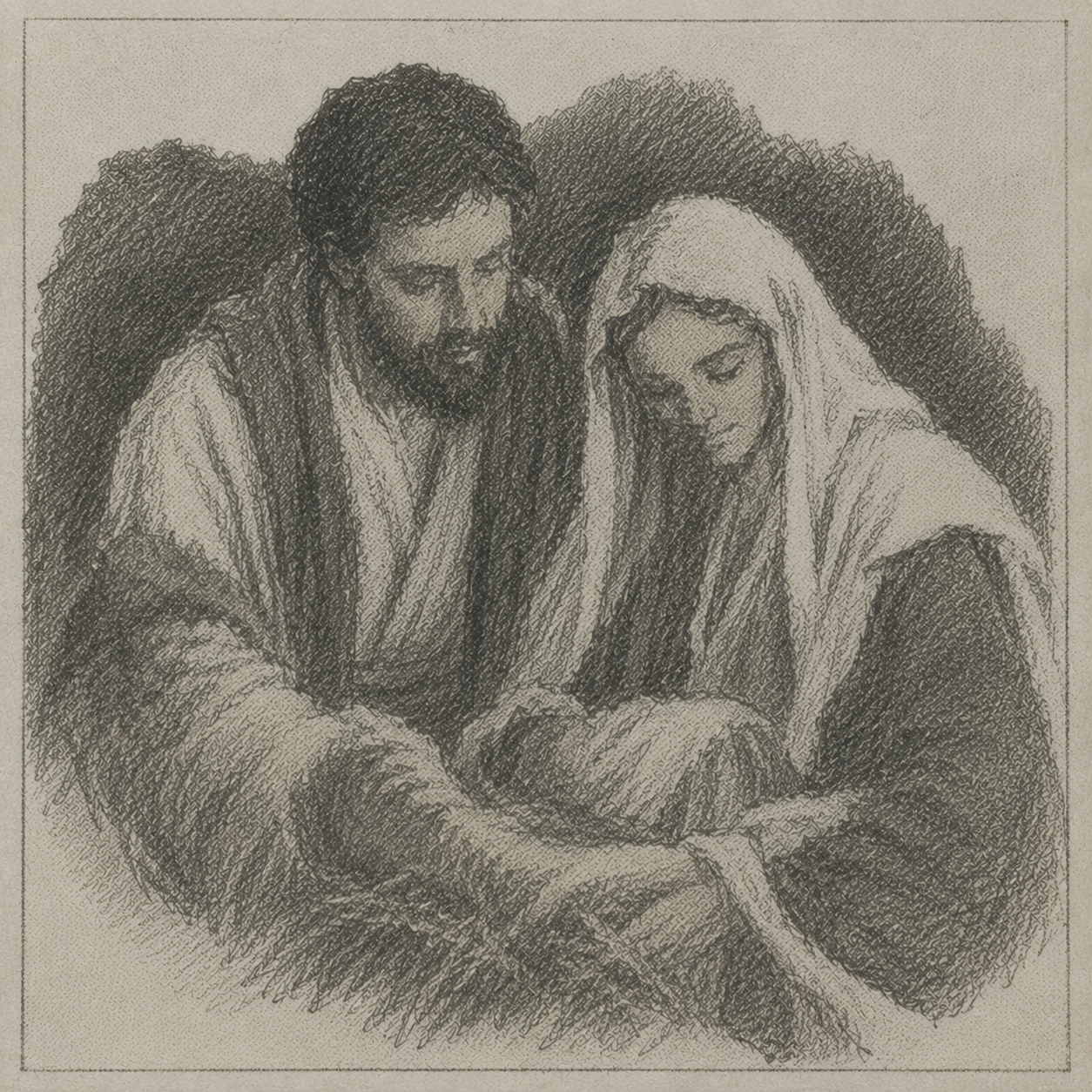
When the wise men came from the East to Bethlehem to worship the newborn Saviour, bringing Him precious gifts, they rode camels. Where the angel of the Lord announced the birth of Christ, and where the multitude of heavenly host praised God saying: “Glory to God in the highest, and on earth peace, good will toward men”. A little over three decades later our Saviour was crucified, resurrected and ascended, where He promised He will return again!
To Beloved India and All the World
A Happy Christmas and Bright New Year
Was Christ a Cosmonaut From Another Planet?
PARIS: A furious controversy is raging in the Soviet literary circles over the astounding claim of a senior Soviet university professor proves to have “irrefutable historical proof” that Jesus Christ was a “cosmonaut with a civilising mission from an alien planet.”
In public lectures and in a series of articles in the Siberian periodical Baikal, Prof. V. Zaytsev has put forward his theory that Jesus Christ and his closest associates (the Apostles) were representatives of an advanced civilisation. According to Zaytsev, they landed in a spaceship “somewhere north-west of Egypt,” and the apparent “descent from heaven” had made Jesus the object of veneration.
“Kingdom in Heaven”
A reader in philology, Zaytsev maintains that historical and linguistic proofs fully support his theory and help reconcile cosmonaut Christ’s celestial, divine, human rights. He points out that the “bright and slow-moving star of Bethlehem” that guided the shepherds to the scene of the nativity had stopped right above the spot where Christ is believed to have been born. The nomadic people of Palestine called the star a “flying temple”, indicating that the holy family landed in a dome-shaped temple.
Christ repeatedly told his disciples that he “came from heaven” and “did not know the ways of the earth”. This, as recorded in the Bible, is further proof that Jesus came from the outer space. Zaytsev asserts that Christ’s insistence that “My kingdom is not of the world”, together with “My kingdom is in Heaven”, is a clear indication of the cosmic origins of Jesus.
Christ’s death and his “ascent to heaven” is used by Zaytsev to further buttress his theory. He says that cosmonaut Christ’s civilising mission on earth was his “tolerance” of social outcasts and his “democratism” was quite out of place in the backward, slave-keeping society of some 2,000 years ago.
“Christ’s humane, democratic attitude - to sinners, Samaritans and even tax-collectors - can only be explained by his ignorance of prevalent earthly views and customs,” states Zaytsev.
This unorthodox theory has brought Zeytsev into sharp conflict with the Soviet Academy of Sciences Academician Fedosyev, Russia’s leading space expert, has discounted his theory and on Izvestia, the government newspaper, said that Zaytsev’s theory “shows a suspicious kinship to the views propounded by reformist western theologians, like Bishop Woolwich, or William Hamilton and Paul Van Buren, working for a Christian revival in the space age”.
— BLITZ, JULY 12, 1969.
(Is this not a Communist interpretation (rather imagination !) of the Incarnation? A good augury!) - Editor Church of Christ
A Parable of India
There was an Indian Christian who lived comfortably in a fine house in a new housing project. He enjoyed electricity and running water and ate three good meals a day. He dressed and lived well. He went to church every Sunday.
Nearby, in another state, a man lived in a famine area, sick, dying of hunger. And he desired only that the comfortably well-off Indian Christian should help him until the time of famine was passed, and a new crop could be harvested.
The poor man died and went to heaven. The comfortably well-off Indian Christian also died and went to hell.
And being in torment of isolation from God, he lifted up his eyes and saw Jesus afar off, and the poor man by his side.
And he called out, “Lord Jesus, have mercy, and send the poor man to comfort me, for I am in anguish.”
But the Lord said, “Son, remember that on earth you had all the comforts of life and this poor man had none. But now he is comforted, and you are in misery.”
And the man who was comfortably well-off in life said, “Then I beg you Lord, send the poor man to India for there are hundreds of Christians there who live as I lived, that they may be warned of the fate in store for them.”
And the Lord said, “They have my words and also many who tell them while they live in comfort, most of their fellowmen live in misery; let them pay attention.”
And the man who had lived comfortably said, “No but if someone were to rise from the dead, they would come to their senses.”
And the Lord said to him, “If they do not listen to my plain words and are unmoved by the cries of their fellowmen, neither will they respond if someone should rise from the dead.”
— N.E. BLALOCK
What Jesus Means to Me - Jesus as the Greatest Economist
Mahatma Gandhi
(With acknowledgement to the Navajivan Trust, we are giving below Gandhiji’s reading of the passage concerning the rich young man given in the Gospel according to St. Mark, Chapter 10:17-31. - Editor)
I venture to think that the scriptures of the world are far safer and sounder treatises on the laws of economics than many of modern text-books. The question we are asking ourselves … is not a new one. It was addressed of Jesus two thousand years ago. Mark has vividly described the scene. Jesus is in his solemn mood. He is earnest. He talks of eternity. He knows the world about him. He is himself the greatest economist of his time. He succeeded in economising time and space - he transcends them. It is to him at his best that one comes running, kneels down, and asks.
Good Master, what shall I do that I may inherit eternal life? And Jesus said unto him. Why callest thou me good? There is none good but one, that is, God.
Thou knows the commandments, Do not commit adultery. Do not kill, not steal. Do not bear false witness. Defraud not, Honour thy Father and Mother.
And he answered and said unto him: “Master, all these have I observed from my youth”.
Then Jesus beholding him loved him and said unto him, One thing thou lackest. Go thy way, sell whatever thou hast, and give to the poor, and thou shalt have treasure in heaven: and come, take up the cross and follow me.
And he was sad at that saying, and went away grieved: for he had great possessions.
And Jesus looked round about, and saith unto his disciples, How hardly shall they that have riches enter into the kingdom of God!
And the disciples were astonished at his words. But Jesus answereth again, and saith unto them, Children, how hard is it for them that trust in riches to enter into the kingdom of God!
It is easier for a camel to go through the eye of a needle, than for a rich man to enter into the kingdom of God.
Here you have an eternal rule of life stated in the noblest words the English language is capable of producing. But the disciples nodded unbelief as we do this day. To him they said as we say today. “But look how the law fails in practice. If we sell and have nothing, we shall have nothing to eat. We must have money, or we cannot even be reasonably moral.” So they state their case thus.
And they were astonished out of measure, saying among themselves. Who then can be saved?
— Arunodayam: February to March 1967
The Attitude to Property - Christian, Marxist and Gandhian
(K.K. CHANDY, CHRISTAVASHRAM, MANGANAM)
Jesus’s Attitude to Riches and to the Rich
Jesus said, “lay not up for yourselves treasures upon earth … for where your treasure is, there will be your heart also.” Jesus was putting the axe at the root of acquisitiveness, and pointing out that treasures on earth would entice the heart from agape to self-love, and from self-love to fear and anxiety to multiply and to defend those treasures. This naturally would result, as it did, in the church’s acceptance of the sword and the way of war for the defence of those treasures. As Hugh Martin points out in ‘Church and Money,’ “Jesus emphasised the perils of the acquisitive instinct more than the evils of drunkenness and sexual vice.” Defenders of private property often appeal to the instinct of acquisitiveness as so deep-seated that it can neither be eradicated nor sublimated, To try to eliminate private property, they argue, is to do violence to human nature, and outraged instinct will sooner or later avenge itself on fanatical idealists. Their contention, that taking away incentives of profit motive bourgeois property rights would breed idleness, and retard progress is given the lie by countries like Russia and modern Israel. Whether acquisitiveness is an instinct or a vice, may have to be answered in the light of Jesus’s words, and the experience of the Fathers. The words “Sell that thou has and give to the poor and come and follow me” were said to the rich young Levite who could boldly tell Jesus that he was a regular tithe giver and observer of the commandments. Riches have a way of enticing the heart from God and your brother in need as would make it hard to set your mind on God’s Kingdom and his Justice before everything else (Matthew 6:33). “How hardly shall they that have riches enter into the Kingdom of God … It is easier for the camel to go through the eye of a needle than for a rich man to enter the Kingdom of God” (Mark 10:23).
St. Paul warned: “The love of money is the root of all evil things … But you man of God must shun all this and pursue justice” (1 Timothy 6:7-11). There are Christian writers who argue that the class struggle is a Communist myth. But the following words said by our Lord Himself, serve as an answer: -
“But woe unto you that are rich” (Luke 6:24): “Blessed be ye poor …” (Luke 6:20). He also said “Woe unto you that are full for you shall hunger” (Luke 6:25). “Blessed are ye that hunger now …” (Luke 6:21).
As Prof. McMurray wrote: “there is no way of escape from recognising not merely that Jesus believed in the common people but that he disbelieved in the wealthy and that he saw in their wealth the real barrier between them and the community of mankind which it was His mission to establish”. As Hugh Martin wrote: “With the best will in this world it is hard if not absolutely impossible for the wealthy man to be on terms of real friendship with a poor man.” Jesus told even a good man like Nicodemus, that there was for the rich ruling class no other way for having even a glimpse of the Kingdom of God but a rebirth into its true values. Addressing the rich ruling class Jesus said: “Serpents, generation of vipers, how can you escape the damnation of hell” (Matthew 28:33). Jesus termed riches as “the mammon of unrighteousness” and said: “use mammon, dishonest as it is, to make friends for yourselves so that when you die they may welcome you to the eternal abodes” (Luke 16:9).
The Law of Love Enjoins ‘Community’
Jesus and his disciples had a common purse. John the Baptist, the fore-runner enjoined “The man with two shirts must share with him who has none, and anyone who has food must do the same” (Luke 8:11), It was the spirit of love and sharing that expressed itself in the communism of the early church, a community of the Holy Spirit, where they had ‘all things common.’ Communism in its true sense means the spirit of community, the sense of belonging together (H.G. Wood). The New Testament speaks of the early church in Jerusalem: “Not one of them considered anything his personal property; they shared all they had with one another. There was no needy person among them” (Acts 4:32-34). What a far cry from this is our experience in the churches today! I am aware of the criticism that this koenonia, a community of the spirit was only a passing bubble, a short-lived effervescence which led to extreme poverty in the Jerusalem community, so much so that St. Paul had to collect funds for them from churches elsewhere. It is argued therefore that it can never serve as an example nor even as an inspiration. Critics, however, do not realise that, that poverty was the result of a widespread famine affecting not only Christians but all sections of people. It was a famine which swept over that whole wide Province of the Empire as recorded by Josephus. They also forget that Christians at that time being a persecuted community did not have the respite or opportunity to engage themselves in production. Sharing, when it is only in consumption and not also in production would naturally lead to poverty. And in the efforts of St. Paul we see a clear expression of the spirit of communism. His words “At the moment your surplus meets their need, but one day your need may be met from their surplus. The aim is equality …” (2 Corinthians 8:14-15) would clearly bring it home to us. “Nor was the Jerusalem Communism an isolated experiment” as H.G. Wood writes: “for the common fund maintained by the weekly subscription … the relief of the necessities of the poorer members, the expression of the spirit of fellowship in the Agape or the love feast become normal features of Church life throughout the Roman Empire.” The Church has to recapture something of the spirit of the Brotherhood of the Common Life described by Kagawa in his “Brotherhood Economics”. Religious Communities such as the Benedictines, Cistercians etc. with their emphasis on labour, love and prayer, a Programme of intensive cultivation, production of wool etc. to meet the growing need were effective in promoting the spirit of koenonia in their areas of influence that “They had power to fix the number of labourers and the amount of production in accordance with the demand of the consumer … Demand and supply were co-ordinated. Production was for use, and prices were fixed according to certain economic scale.” Kagawa goes on to say, “I connect the fact of the progress of Christianity in those dark ages with the Christian Brotherhood Movement, the Mercantile guilds among the labourers …” Today in Kerala where Christians are in the vanguard of production what a glorious opportunity for us to lead the way in setting an example to sharing in production and distribution according to need in our communities and parishes, and in helping the nation in building ‘the socialistic pattern’ to which it is committed.
Intensive Communities, an Urgent Need of the Hour
A great social thinker, the late Bishop Westcott of Durham wrote: “I cannot express too strongly my conviction that communities of families bound together by common principles of living, of work, of devotion, subject during the time of voluntary co-operation to central control and united by definite obligation, which habitually connect devotion with labour is one of the most urgent needs of the present age.” The Gram Dan Movement in India offers a great opportunity for an indigenous and national expression of this challenge to community living. A Study Consultation held at Nagpur held in 1954 observed that “In the history of the Church such experiments in Community living have been tried from time to time and have helped to challenge society to take a right view of property over which we tend to fight.”
The Early Fathers on Property and Community
St. Ambrose wrote in the 4th century: “God wished the earth to be the common possession of all men, to produce its fruit for all men, but avarice created the rights of property”. The idea of private property, specially in the means of production and the laying up of treasures was alien and hostile to the spirit and teaching of Jesus and the Early Fathers.
Following Emperor Constantine’s acceptance of Christianity as State religion and the extension of rights and privileges, Christians, overwhelmed by this victory over Rome, were taken off their guard as it were with regard to some of the basic values they were striving to uphold and expressed in the Jerusalem community such as the spirit of love and non-violence, and their non-attachment to property. They slowly began to lay up treasures on earth and to accept the security of ‘Pax Romana’ based on the sword, rather than the security of ‘Pax Christi’, the security of agape. The Bishops in course of time no wonder, began to become landlords and to lead even their armed forces! (The Bishops on our Chess Boards are reminiscent of this.) The Church thus found it hard to look at property except with a jaundiced eye. No wonder a critic like Dr. Radhakrishnan wrote “The Roman Empire failed to destroy Christianity by persecution but the hour of her victory over Rome signalised the defeat of the Gospel of Jesus”. Her treasures on earth began to entice the organised church, to accept pagan ideas of ‘property’ slavery and a theology of power which entangled her with the surrounding pagan culture, laming her progress as a “Holy Nation” (1 Peter 8:9), the divine Commonwealth. The indignation felt by the Early Fathers against this change of attitude to “property” as a compromise with pagan or sub-Christian standards may clearly be seen from words such as of St. John Chrysostom who wrote “Community of goods is a far more suitable mode for life for us than private property, and it is natural”. “Tell me” he wrote, “where does your wealth come from? You owe it, to another. And this other, to whom does he owe it? To his father or grandfather you say. Will you now in tracing it back argue that the wealth was earned in a Just way? That you cannot do. On the contrary, the beginning, the root of it lies necessarily in some injustice … He (God) left the … earth as a possession for all men. Then, if this is the common property of all, from where have you so many acres and your neighbour not a clod of earth?” Even granting that ‘you or your father’ earned it lawfully, he asked, “Does that make wealth into something good? By no means. But it is not something evil you say. You are not greedy if you share with the needy, then wealth is not evil; but if you do not, then wealth is an evil and a dangerous thing … But as soon as someone tries to draw something to himself, and make it into his own private property then quarrelling begins, almost as if nature herself was enraged”. We see this more vehemently stated by Bossuet later, who wrote: “And Ananias having despised this law which charity had imposed, was punished condignly as a villain and a thief despite the fact that he had only kept what was his own; whence it comes that he is called by John Chrysostom ‘the thief of his own wealth’. Tremble then Christians and being imitators of his crime anticipate his punishment … and let no one object that we are not now subject to those laws since that community no longer exists; for what a shameful statement is this! Are we still Christian if there is no longer community among us?”
St. Jerome said: “The rich man who does not give, commits theft, it is a kind of sacrilege not to give the poor man that which is his wealth.” St. Gregory the Great said: “In giving necessities to the needy we only return to them that which is theirs; we pay a debt of justice rather than accomplish a work of mercy.”
St. Augustine wrote in the ‘City of God’, “private property is a result of sin” and that “partly to provide a punishment for greed and partly to provide a remedy, private property becomes a necessity and an institution of the organised State.” Even Thomas Aquinas on whose teaching the Roman Catholic Church seems to base its concept of the sanctity of private property stated, “The goods of the earth are the common inheritance of humanity” and though property as a right of administration and distribution is lawful, property as right to exclusive use is not. We should thank God that under the leadership of Popes John and Paul in our times, there is a genuine attempt to recapture the true Christian attitude to property.
“We renounce forever both the appearance and reality of wealth, especially as regards dress (rich material, striking colours) and insignia of precious metals. We shall not possess buildings, furniture, bank accounts etc. in our own names; if possession is necessary we shall place everything in the name of the Diocese or of social and charitable works.” As Canon Raven wrote: “Koenonia which at Pentecost received a new significance and which includes both communion and community - and perhaps communist - is the result of agape. When this animates a group mutual sympathy produces the organic unity described in the Acts, as being ‘of one heart and of one mind,’ and by St. Paul in terms of the ‘one body and one spirit.’ The church in its true nature should be such a society; and koenonia rather than test creeds or hierarchies or cultures should be its differentiating characteristic.”
— Arunodayam, May 1967
My Spiritual Pilgrimage (From Previous Issue)
I became attached to Brahmoism and to Christianity almost simultaneously though during the earlier part of my residence in Dacca I was inclined more to Brahmoism than to Christianity. Had I not kept up this connection with Christianity (for which I thank God) perhaps I could not have become what I am today. There was sufficient reason for my partiality to Brahmoism at that time. First, it is indigenous in every way, and so naturally appealed to my heart. Secondly, it possesses a most excellent literature in the vernacular, which I believe, in the most effective instrument to change men’s opinions. Thirdly, it offers a reconciliation of all the conflicting religions of the world though I discovered the fallacy of its eclecticism before long. Lastly, the Brahmo community is highly developed in point of education, morals and religion, and is a pleasant half-way house between Hinduism and Christianity. All these draw my attention to it. I hardly found any good Christian literature, and scarcely frequented the Christian church. I remember having gone to the Bengali service twice, but it gave me little satisfaction. Everything, even the very atmosphere, seemed to me foreign and alien to my taste. But it must be noted that I never broke my connection with Mr. Morris. I had made considerable progress in the study of the Bible. We used to have prayers together after reading the Word of God. All this was exerting a secret influence upon my soul. Brahmoism stirred my whole being because it was more critical than constructive; while I found a sure and lasting consolation whenever I read of the gentle Jesus. I noticed there was something real and living behind the simple words of the Gospels. Gradually the personality and character of Christ began to capture my imagination. I found that the words of the Gospels were not merely dead letters, but full of inspiration and power - above all soothing and life giving. As days went on a dignified, sedate but yet most glorious and dazzling ideal appeared above my mental horizon. I was experiencing the power and winning influence of the personality of Jesus. The Gospel message gave me hope and gladness, and supplied me with an ideal. But if it had ceased there, I could not have been what I am.
The living word of God warned me of a serious fact in my life. The life and death of Jesus convinced me of the fact that God is not only loving, beautiful and almighty, but that above all he is holy and righteous. The character that has been revealed through the Gospel pages brought out my own character in its true colouring; it told me plainly that I was a miserable sinner, unworthy of the Heavenly Father’s love and affection. My whole life became gloomy. At this time I was most unhappy not knowing how to relieve my pain. I had not yet understood the meaning of the death of Christ, and so resorted to Brahmoism to seek for relief of my anguish. I thought that through sorrow and repentance I would be able to wash away the stain on my soul and secure God’s forgiveness. So I decided to accept Brahmoism not knowing definitely why, only thinking that thereby I would be able to quell the storm that had arisen in my moral life. This period of my life about a year was a most unhappy time for me. I tried but could not become a Brahmo. Not that any human force kept me back, but I felt a supernatural power always working with my soul, heart and spirit. It was somewhat later that I began to be clearly conscious that it was the ever living Jesus of Nazareth that was inwardly controlling my life.
All through this stormy period I felt that I must be honest and sincere with myself. True to conviction, I must try my best to follow the light and the truth as far as I knew it. All through my inquiry after religious truth, I used to pray and meditate for light and truth. True to the rationalistic principles of Brahmoism I could not take Christ or any other great man as my sole spiritual guide and ideal. But I was now finding myself unable to resist the influence of the Son of God. Often did I utter unintentionally and unwillingly the simple name ‘Jesus’ silently after a solemn and earnest prayer. Mr. Morris often spoke about Jesus, about His love and my sin, but he never persuaded me to become a Christian. He often advised me in his letters to follow the right and shun the false when I know it. Often did I write to him almost unwillingly about my faith in and love for Jesus. Very soon I came to find in Jesus my personal Saviour, my friend, my Guide and Ideal. I believed because I could not help believing. In this conviction and experience I was helped by Dr. Frank Lenwood of the L.M.S. who at that time was on a lecture tour in India, and visited us in Dacca. His main theme was Man’s sin and God’s redemption.
Now came another conflict in my soul between Brahmoism and Christianity. Brahmoism taught me to be critical; I felt I must not take Christ so easily. My faith in Jesus might be the product of a charm and just an emotion not necessarily an intelligent response to truth. I must question him and test him. If he could stand the test, I would accept him or else not. This was a period of intellectual doubt, conflict and struggle. The supernatural element in Christianity was for a long time a great stumbling block to me until through the agency of both human and Divine help, I was led to see that all true religion as such, and especially Biblical revelation, is inseparable from supernaturalism. The possibility of a special revelation was a knotty problem, but soon I was convinced that for a perfect, adequate and vital religion revelation was absolutely necessary. I believed quite sincerely that truth must triumph in the long run. So I applied this rational criticism against Christianity and Brahmoism alike. Under the pressure of this criticism my faith in Brahmoism came to pieces. I found that Brahmoism was a mental abstraction and a philosophic speculation having little reality behind all its teachings, and no organic unity amongst its principles I discovered the unsoundness of its eclecticism. I found that Brahmoism was largely Christianity divorced from the living Personality of Jesus Christ, and my surprise knew no bounds. It taught me that God is loving, but it overlooked that he is also holy and righteous which I learned at the feet of Jesus. It talked loudly of the fatherhood of God and brotherhood of man. But all this is meaningless without the Sonship of Jesus. Brahmoism stirred the depth of my soul, created a restless spirit in me, but gave no adequate consolation and peace. It told me to repent and turn to God, but I was unable to work out true repentance. I often shed tears but found no peace, no assurance of God’s love and forgiveness. It increased my restlessness and dryness of heart. I chased the shadowy ghost of the God of Brahmoism in vain. It eluded my grasp, and I could not worship unless I created a God in my heart. But I was not to be satisfied with imagination. I wanted reality which would at once satisfy my conscience and intellect. Brahmoism hardly told me anything of the stain and impurity which blackened my soul and heart, and dimmed my vision of God and defiled His image in me. Brahmoism scarcely offered me an adequate means of salvation except a false repentance which had to be worked out. It told man to go to God, but did not undertake to remove the barrier between. Reason and intuition are the ultimate criteria of judging truth according to Brahmoism. Revelation is an absurd impossibility. Well did my whole nature revolt against such a system when I arrived at the age of discretion and maturity. Christianity I found to be the most rational faith which satisfied the intellect as well as the deepest need of the human soul. I tested Christ and found him true and strong. In him, I found my highest moral ideal, and the perfect assurance of a Divine Reality who is our loving and just Heavenly father. The purpose and necessity of Christ’s death on the Cross of Calvary became clear to me, and as I linked myself to Him through faith and trust and surrendered my will to His, I found myself electrified with His spirit, my sense of guilt removed, the black stain washed away by the sacred blood of the Lamb of God. The Heavens were opened as it were, and a new vision of life crossed my mind. I decided to accept Christ as my Saviour and Lord publicly through baptism. I told my father of my conversion and decision. He wept bitterly and apparently did not oppose. My friends and people also became alarmed, and all combined to prevent me from becoming a Christian. They offered me many strong temptations. To some of them I yielded. But Christ would not let me go astray; He raised me as soon as I fell because I looked unto Him even when I was falling. At last, through the weeping and sorrowing of my parents and friends, I was led nearest to my Saviour and was baptised in 1908 by Rev. P. Noble, Superintendent of the Baptist Mission, Dacca.
“Come unto me, all ye that labour and are heavy laden, and I will give you rest. Take my yoke upon you and learn of me, for I am meek and lowly in heart and ye shall find rest unto your souls. For my yoke is easy, and my burden is light.” (Matthew 11:28-30). That gracious tender call of Jesus, the like of which I had not heard anywhere else arrested my attention. The whole process of my conversion was completed when I became convinced of the legitimacy, authority and force of the unique claim of Christ when He says, “I am the way, the Truth and the Life, no man cometh to the Father but by me! (John 14:6).
Before I became a Christian I had no definite idea as to what work I should do in my life. My only anxiety then was to find out a moral ideal and a spiritual standpoint and when once I found that, I thought it would be all right with me. And I thought rightly. It was after my baptism, through lonely prayer before the throne of God, that I found out His will and purpose for my life. It was after cool deliberation and through God’s guidance that I arrived at the final decision with regard to my lifework. I felt my humble life, all my energy and ability, must be used in the service of my Master to whom I owed all that I was.
Published in the N.C.C. Review, 1949, March issue; and in “Religion & Society.”
Toward the New Jerusalem
Jerusalem, December 1968.
A few miles south of Jerusalem, on the road to Bethlehem, the steel and concrete foundations for the new Ecumenical Institute for Advanced Theological Study are rising out of the stony subsoil. Here on a cypress-crowned hill within sight of Jerusalem and Bethlehem the first serious attempt at continuous scholarly discussion of the relations between the separated churches of Christendom, and of their relations with other faiths, is to be made.
To provide a permanent home for the institute, Pope Paul made available 35 acres of what is now “occupied land” on the west bank of the Jordan.
Dr. Hesburgh has moved swiftly in planning for the ongoing discussions. For his academic committee he has assembled a galaxy of ecumenical “greats,” including Robert McAfee Brown, Russell Chandran, Ives Congar, Georges Florovsky, Paul Minear, Albert Outler, Howard Root, Raymond Panikkar and Edmund Schlink.
Around the central court of the building there will be a chapel, a library, seminar rooms and a hostel for 40 persons, with adequate rooms for public and private use. There will be ten flats with a kitchenette and two or three bedrooms each. Associated with the institute there will, it is hoped, be a small Benedictine community to provide a continuous liturgical life for an academic foundation whose nucleus will be groups of resident and visiting scholars.
Themes of research and study will be selected that bear on the main concern of the institute: the history of salvation and the “divine economy” which has issued into human life through the various streams of divine offering coupled with man’s response. The theological, liturgical and canonical movements of the church will be set within the world order as the divine wisdom has appeared to ordain.
This is ecumenism with perhaps a deeper thrust than has been characteristic of the approaches customary within the pan-Protestant context. It will make use of the insights we can expect from the deeper involvement of the great western and eastern branches of the Christian faith. Jerusalem, of course, is an ideal setting for thinking of ecumenism, which can be enriched by Jerusalem’s unparalleled opportunities for contacts with “other religions.”
On this occasion I find myself, like every other inquiring visitor to Jerusalem, drawn into groups which, loosely organised, have been doing this kind of ecumenical probing for many years. What the new institute can give such groups is a regular and recognised place of meeting and an atmosphere of scholarly discipline and research. As Jerusalem has offered facilities for the archaeological and biblical experts in their fields of research, so now Jerusalem is preparing to be a home for the ecumenist at the level of that kind of scholarship which has made the other disciplines in Jerusalem so renowned.
The institute has chosen as its motto Mysterium Salutis. Its sponsors seem well aware that, as they say, “a theology deaf to the cry of the modern world would soon tend to become totally deaf.” Living within sight of Jerusalem and Bethlehem, the institute is not likely to avoid the historic and contemporary tensions which rend the garments of both towns. Given the right kind of sustained leadership, it may well mark a decisive turn in the ecumenical movement, one which it needs and from which all the churches of Christendom may benefit.
CECIL NORTHCOTT.
Christian Century Editorial correspondence.(New Jerusalem is one that comes down from Heaven. (Revelations 21:2); There is room for genuine fear that the ultimate result of such a venture may be a bad compromise with Rome and syncretism in the church in her relations with other religions. Because the scholars and church dignitaries are not conversant with or affected by the pestilential problems of the ordinary Christians in their daily life. Doctrinal or organisational union will lead only to empty uniformity of which the church is full. Without unity of spiritual and moral faith around the Cross, church union would be a mirage. The average member of the church stands in dire need of simple conversion and new life - the true Gospel - the real unity and strength of the church (John 3:16). - Editor)
Church Union Backlash
BY D.P. TITUS
(D.P. Titus is the Executive Secretary of Council of Evangelism, Methodist Church of South Asia. In the August 21, 1969, Issue of INDIAN WITNESS he lists some of the reasons why he opposes the present plans of Church Union in North India. Due to limited apace we can only reproduce part of the article here).
First, I Reject the Plan of Church Union as Being Against the Word of God
The most misused verse in favour of church union is John 17:21. Learned scholars of the word have never taken it to mean that Jesus prayed for the coming into being of a Universal Ecclesiastic Corporation. The most travelled and renowned missionary, Dr. S. Stanley Jones, does not understand it this way. The learned New Testament commentator of our times, William Barclay, does not see it this way. Barclay comments:
What was that unity for which Jesus prayed? It was not in any sense an ecclesiastical unity. It was a unity of personal relationship. It was a unity of love for which Jesus prayed. (The Gospel of John, Philadelphia, 1965, p. 255).
Dr. William Temple, the former Archbishop of Canterbury and a great leader of the ecumenical movement, once wrote as follows:
“The way to the union of Christendom does not lie through committee rooms though there is a task of formulation to be done there. It lies through personal union with the Lord so deep and real as to be comparable with his union with the Father. For the prayer is not directly that believers may be one in the Father and the Son. The prayer is that they may be in us. It is not our unity as such that has converting power; it is our incorporation in the true Vine as branches in which divine life is flowing.” (Readings in St. John’s Gospel, London, 1940, p. 327).
This type of unity is explicit also in Paul’s doctrine of the Church as the Body of Christ - “One body many members.” (Romans 12:4-5; 1 Corinthians 12:4-31; Ephesians 4:14-16).
This Idea of unity made it possible to speak of one church in the era of early church Fathers when each church was autonomous. The unity of the Church was a unity-with-distinctions. Churches of Jerusalem, Antioch, Galatia, Corinth, Cyprus and Alexandria were ecumenically one, organically not. Out of many varieties of musical instruments came one symphony.
But some people are curiously trying to help God make one Church in our times, whereas all through the centuries God has never had more than one Church.
Secondly, I Reject the Present Plan of Church Union Since It Will Bring No Gain to the Life of the Church
Will the union, if accomplished, be more effective in winning souls to Christ? Will it be the cause of revival in the Church? Will it bring greater co-operation with other evangelical and free churches My answer to all of these questions is “No.”
On the other hand, the union of churches under the present Plan will let loose chaos and conflict in the Church in North India for the remaining 31 years of this second millennium. The conflict will spring up soon after union when each diocese will begin constructing its own constitution in matters of faith, worship, practice and use of property. Some writers on this subject have already described the conflicts which have been sparking in other united churches since their union.
Bishop Gerald Kennedy, the well known Methodist speaker feels that one big church would be no house of harmony - “Some of the worst in-fighting I have observed,” he says, “was not between leaders of different denominations but between leaders of the same denomination.” The bishop cites that the enforced merger of the Protestant churches in Japan and the formation of the United Church of Canada indicate that bigness bogged them down, while the church groups that stayed outside of union grew faster in the same territory and acted more effectively. The learned bishop further posed a question last year: “Does history say that the renewal of the Church comes about through mergers? … Indeed, just the opposite seems true. When the Church needed renewal, God usually acted through a small group who were forced out into a separate life and destiny. (Is COCU a Dead End, Christian Advocate, July 11, 1968).
Thirdly, I Reject the Plan of the Church Union as a Backward Movement for the Church
Fourthly, It Creates Division in the Precious Unity of the One Body of Christ
Our ministerial ordination has a universal character. We were not ordained as Elders “in the Methodist Church” but “in the Church of God.” We exercise this ministry in various denominations wherever we are invited. But after church union our ministry will be confined to the so-called “historic churches”.
In the Plan of Church Union the authority to discipline ministers rests entirely in the hands of the bishop. A caution to ministers who care for democratic rights.
— Via The Revival
(Ever since the church union idea was mooted, for the last nearly half a century we have been expressing similar and many other reasons why we should have gone for a Federal Union rather than the so-called Organic Union which is really not organic but organisational. Either the leaders of the movement are incapable of deep thinking or are a self-interested lot. - Editor)
Many Methodists Are Still Against Church Union
It is a good question whether the Methodist Church in Southern Asia will go into the Church Union scheme in North India. If there was ever a Church where the minority have tried to brainwash the majority, the Methodist Church is it. Several years ago the Church voted against the Union Scheme, but did that stop the friends of the Ecumenical Movement - not a bit. That minority just kept on plaguing the majority as if there had never been a vote. This, of course, is the chief characteristic of the Ecumenical Movement - a noisy minority who, demanding toleration, in reality interfere with work of the Church and deprive the majority of their right to peace and a forward moving evangelistic programme. But, let that little minority get a one vote majority, and the matter is settled forever. Once the decision is made to enter the gravity of the Ecumenical Monster there is no opportunity for organisational withdrawal as thousands of honest Protestants against the Church of South India have discovered to their sorrow.
It is therefore refreshing to see men within the Methodist Church standing against Church Union. It is also refreshing to see their protests published in their denominational organ - no such thing has happened to date either in Anglican or United Church Northern India circles. Within the Methodist Church however, there seem to be some signs of life, and it is the earnest prayer of the Editor that by the grace of God there will be a sizeable group in the Methodist Church who will not only resist the gravity of the Ecumenical death but take a lead in a return to the primary purpose of the Church - the winning of precious souls out of darkness in the marvellous light of Christ.
Two of the protesters are the Rev. Justin N. Harris, District Superintendent in Bombay and the Rev. Joel Singh, District Superintendent in Hisar, Haryana. Mr. Harris centres his objection on the lie that is at the heart of the Ecumenical Movement. He says that (John 17:21) is bandied about ad nauseam whenever anyone speaks of Church Union. He continues his argument by observing the Church of South India and reasoning; “If the C.S.I. was formed according to the above verse (John 17:21) then a great increase in evangelistic work and gathering in of souls into the Church should have taken place. However, quoting from one of the C.S.I’s own publications The First Decade, he shows that the opposite is true:”It is true generally to say that throughout the Church of South India Evangelistic activities have slowed down considerably and in some parts of the Church have come almost to a standstill”. To Mr. Harris, the conclusion is obvious - The form of Union within the C.S.I. is not the form of Union mentioned in (John 17:21). John 17:21 does not fit the Ecumenical Movement in any practical manner.
Mr. Joel Singh takes another course in his objections to the Church Union Movement. He points out that what the Union enthusiasts consider progress is really a turning of the back upon the Reformation principles which brought forth the great evangelistic awakening and the Gospel anew to the ends of the earth. He asks 8 questions which are worthy of consideration by every Christian who is faced with the decision, What shall I as a Christian do in relation to the matter of Church Union. These are Mr. Singh’s questions:
Why did the pre-Reformation leaders like John Wycliffe of England and John Huss of Bohemia reject the supremacy of the Pope?
Why did Martin Luther nail his “Ninety five Theses” to the door of the Church in Wittenberg, Germany?
Why did Zwingli and Calvin lead the Protestant revolt in Switzerland?
Why did John Knox found the Presbyterian Church in Scotland?
Why did John Wesley proclaim the glad tidings of Salvation in the highways and byways when all the pulpits of the Anglican Church were closed for him in England?
Why do we think that the denominations are not the will of God? Someone has said that the rise of denominations is “the unpaid bill of the Churches.”
Why should we discard the heritage which has come down to us since the great division of the Church into East and West in 1054 A.D.?
Why should we reject what Martin Luther did not recant before the Assembly at Worms on April 16, 1521 by saying: “unless convinced by the testimony of the Scripture or by clear reason … I cannot and will not revoke anything, for it is neither safe nor right to act against one’s conscience. God help me. Amen”?
Mr. Singh says that in reality the Union programme is merely a “get-together” of seven denominations; not union, but a Tower of Babel. Again he says, “The Reformers blamed the Roman Church for muddying up the pure Water of God’s revelation by man’s tradition. Now, the Protestants must blame themselves for betraying the Reformers by churchly liberalism and biblical distortions.”
May Almighty God give to these men and others like them within the Methodist Church the grace, wisdom and courage to continue to be shining lights in the Ecumenical darkness that is today upon the Church in North India.
— J.L.D., - Biblical Witness
The Perils of Ecumenism
Archbishop Lord Fisher of Lambeth, former Primate, emphasised the dangers of ecumenicity when he addressed St. Lawrence Jewry in London (March 14) - One danger, he said, was that it might make Christian people unwisely forgetful of the restraining and inspiring loyalties which they owed to their own Church tradition, and to its ordering and understanding of the Christian faith. “Another and more insidious one is that ecumenists will proclaim, as indeed some of them are already proclaiming loudly, - that it is the will of God that all particular churches of the Church militant should aim to become a single body, organised and operated as one single organised whole, with a common faith, common life, a common structure of control.
“As time goes on there may well be room for structure alterations and adjustments, but there is nothing in church history or theology to suggest that all particular churches must cease to exist or must lose their power of self-government. To invent a new terrifying, all-embracing ecclesiastical union would be the sure way of abolishing the spontaneous spirit of an all-embracing bond of unity”.
Lord Fisher was of the opinion that what was needed for full communion between two churches - one episcopal and the other not - was that they should first be permanently reconciled and then their ministers should be so coordinated that they might freely officiate in the ministry of word and sacrament in either church, without any suggestion of betraying the loyalty which each minister still owed to his own church.
Dr. Cecil Northcott commenting on the proposals now before the Church of England to cut its theological colleges from 25 to 14 and the decline in the clergy ordinations to a low ebb, a situation faced also by the Free Churches and the Roman Catholic Church, observed that it was one of the symptoms of revulsion against institutional Christianity in our time. “It is far too easy to gird at church leaders to do something about it … Our splendid excuse, moreover, is the ecumenical movement, which holds out the glorious spectacle of a renewed and united church in which the Roman lion will lie down with the English lamb, and the Scottish Covenanter begin to love an English Bishop. Important as the ecumenical movement is, it is no substitute for the Church discovering what kind of ministry it should be offering to the modern world, and what sort of parson should be trained for that ministry. We cannot wait for union before being united in action …”
— S.D.M., London Letter to the Guardian
1. Notes
National Prayer Assembly
Under the auspices of the Evangelical Fellowship of India an all India assembly for fasting and prayer was arranged to be held in Varanasi early in November. Delegates from many states numbered around a hundred. On the opening day many local Christians including Catholics joined. There were welcome addresses and united sessions of short talks and prayers both in the morning and evening; at other times small groups met for prayer in separate rooms. There was a chain of night prayer and vigil kept up by some.
The aims of the Assembly were spiritual fellowship, revival and renewal, and invocation of the Holy Spirit. The Assembly lasted for 3 days. That the objectives were realised in a measure is admitted. There was no doubt some good fellowship between groups and individuals coming from distant parts who did not know one another. It was also evident that some friends came hungry and thirsty to be filled with the blessings of the Spirit. But a prominent local man said it was a useless pastime in religious exercises.
We offer our comments for serious consideration of the organisers of the Assembly and their patrons and those who participated.
Real effective prayers cannot be organised by a leader or a committee with the help of money. Both Indian spirituality and the religion of the Bible will support it. The thing is mechanical and artificial.
The Assembly organisers were too much under pressure of western culture (which is quite natural and effective in the west) in an Indian context. One felt one was in England or America in a prayer meeting. It is alien to the genius of India. There ought to have been more of meditation, free and suggested, as well as meaningful waiting upon God, and not so much of uttered prayer. The little congregation at Jerusalem waited in expectation and unitedly in love and fellowship. There is no evidence that they spoke their prayers loudly or even audibly, and they were seized of the spirit.
The big sign cloth “National Prayer Assembly” at the gate boosted publicity and propaganda rather than the spirit of repentance and prayer. In introductory speeches serious and possibly deliberate omissions were made of the Benares united city - mission and the Pentecostals who have done in the Hindu city honest evangelistic work and whose ministry has been abundantly blessed with fruit in conversion while the other missions, spending a lot of money and having highly paid personnel have been barren of result and have never touched the city, got prominent reference.
We have no idea how many really fasted. Fasting should be personal and private and undertaken in a spirit of real guilt and contrition and not for attaining something. Our Lord’s injunctions should be remembered; prayer and fasting and all religious works should be unostentatious and without any desire for rewards. (Matthew 6:1-18).
Entertainment charges of Rs. 6/- a day within a poor Indian economy was spiritually unhealthy in a fasting and prayer assembly. We cannot develop deep spiritual life with high material standards and by increasing our bodily needs.
Revival or renewal of life cannot be induced nor can the Holy Spirit find an opportunity to work in human heart, so long as sins remain unconfessed and unforgiven and true humility remains an unknown or unrecognised virtue. One of such sins; so rampant these days and hardly thought of except by Godless Communists, is the invidious social and economic distinctions between individuals, classes, nations and races maintained by the power of wealth and unjust laws - that is foiling the function of the Holy Spirit within the Church. The hierarchical financial and cultural distinctions in the services and activities of Church block the spirit; as long as there are rich and poor, higher and lower, caste and untouchable, educated and uneducated, one class and another, and the consequent estrangement, contempt, hatred, jealousy and pain; you cannot expect a revival in the Church; Prayers and evangelistic meetings will end in smoke and the huge expenditure of money, time, energy on the part of many will only show the vanity of human wisdom and effort.
Let us be indigenous and natural in our Christian life in India giving up mere imitation of the foreign and all worldly ambitions and greed for power, position and self.
Promotion of genuine revival should be fostered by quiet personal work by appointed secretaries or leaders done in the villages and towns and small regional groups should be arranged for prayer, meditation, informal discussing, accompanied by actual evangelistic and humanitarian service.
2. In Memoriam
The Rev. Dr. (Medical) Jitendra Lal Sircar, B.A. of Gopalganj (Faridpur), E. Pakistan - a place hallowed by the memory of Sant Mathuranath Bose, passed away at 79 some months ago at his home leaving behind his wife, a daughter and a son to mourn their loss. Dr. Sircar was originally a School Master serving on the staff of the local Mathuranath Institution founded for the benefit of the Chandals (the Namasudras) of the Beel area. But he took to the profession of a Homeopath and made a good success of it. With his death disappears the last educated leader of the small local Church. Dr. Sircar was a grandson of the famous evangelist and colleague of Mathuranath, and incidentally, brother-in-law of this Editor. He was a humble prayerful man and a faithful Christian. We offer our heartfelt condolences to the bereaved family.
Shri Akshay Kumar Nandy of the Jewel House, Tollyganj, Calcutta-33. The well-known businessman, social Reformer, and journalist - died in the nearby home of his daughter and son-in-law - Amala and Uday Shanker at the age of nearly 90, leaving behind him his wife and several daughters and sons to mourn their loss. Shri Nandy was one of those early manufacturers, who evolved the industry of conch shell ornaments attached with gold and took his wares to the Wembly Exhibition in London. He made extensive travels of English villages and wrote a valuable book that was accepted as a School Text Book in Bengal. He fought for the rights of Women especially. Widows and forsaken wives and gave employment to some of them. He conducted a journal - Matrimandir - for the purpose. It would be interesting to know that at his instance the Calcutta Tram Company reserved separate seats in tram cars for women.
It would be of particular interest to thoughtful Christians to know that he was a believer in Christ (baptised in Ganga in front of Serampore College by its Principal, Dr. G.W. Howells in 1914). He lived in his home with his wife worshipping Mother Kali in the next room. He used to say that he was a Christian at heart but a Hindu culturally and socially. He has come and lived in our Ashram in Varanasi several times and on one occasion, his birthday - he gave a testimony to his faith in Christ as his saviour and to the Holy Spirit guiding him at a meeting of Banaras Fellowship consisting of educated men of different communities. The Bengali version (called Antarjiban - internal life) was printed as a booklet and distributed and sold among many.
He was a very dear personal friend whose loss we feel, but he has gone ahead in peace. Our sincere condolences to the family in sorrow.
- Shri Bibhudan Roy, M.A., B. Ed. (Bristol) - One of our dearest friends - departed this world only the other day. His wife, a son and a daughter survive him. He was living with his family in Kaorapukur, Calcutta-41 and had been suffering from Chronic Weakness of the Chest for some years for which he retired prematurely from his position in the Bengal Government Social Education Department. In spite of his weak health he was brave enough to work as Principal of a Boy’s High School and later of a Girl’s High School in the South Villages. On top of it he was actively engaged in Church work as Chairman of the South Villages Baptist Saminilani in 24 Parganas. Since his younger days while he was in active Government Service he had accepted the post of Secretary of the Bengal Baptist Union and later was its President for 13 years. He kindly accepted the position of President of the “Bharat Khrist Sangh” for the last 5 years. He had a quiet forceful nature, a man of faith, courage and prayer. The Church in Bengal did not quite understand or appreciate, so failed to utilise, his great qualities of Leadership. He passed a life of moral and spiritual struggle and struggled with poverty and many disappointments and evil forces, but he faced them bravely. In his death we miss a man of quiet influence and cheerful nature. We pray that the Heavenly Father will give his grieved family consolation and peace and show them the right way in their future.
We commend the Andhra Christian University Scheme to all concerned for prayer, and moral and material assistance. While keeping living links with the spirit we must come down from visions and dreams to grassroots and brass tacks and must develop moral and intellectual convictions of which, we believe, the organisers are abundantly possessed. We should know and appreciate the fact that Serampore Christian University has existed since the early decades of the 19th Century. We may also mention that it was supported by the Veteran Christian Leader the late Augustine Raka Ram of Allahabad pleaded for a Christian University in the Christian Council of U.P. but in vain. So we are encouraged by the courageous efforts of our Andhra Brethren. They have our sincere prayers, goodwill and blessings for the fulfilment of their worthy objects and high ideals.
- Creation and perpetuation of economic and social distinctions of an invidious character in the rank and file of the Sevaks of the Church have prevented the growth of fellowship which belongs to the core of the life of the church. Sharing of hardships or enjoyment of plenty by all together will foster hope, trust, brotherhood, courage, sacrifice and venture and these are the qualities most needed in the life of the church.
Sources of income being different and workers being paid from different funds by different authorities hopelessly divide the church in the very centre, and breed jealousy, competition, and frustration. And this is being encouraged not haphazardly but consistently through an unsound system.
What is the use or meaning of Church Union when in the hierarchy of ecclesiastical service the workers are so apart from one another in the sphere of life itself? It seems almost like, as in a business concern, the management and labour mutually opposed. Self-support cannot be imposed from outside or from above apart from the community of economic and social life. Those who want the Indian church to be autonomous self-respecting and self-propagating must be truly and collectively part of the life of the church. Let us remember also that these despised and neglected Sevaks - the Pastor, the Preacher, the Catechist, the teacher, the Colporteur are the people who primarily matter - who are touching and moulding the life of the church and the country. They are in the realistic situation, and they must be strengthened materially, morally and spiritually. Bishops, superintendents, secretaries and other officers may disappear, but these constitute the bedrock of the church.
- Mission Raj still has a strangle hold.
Though national freedom is more than two decades old, the freedom of the church is a long way to Tipperary. In a few cases, foreign missions as distinct entities have disappeared but appeared again through missionary personnel being drafted in the service of the Church as bishops, or Treasurers, or Teachers and advisers. This is true in the case of the fewer but bigger organisations where missions have integrated themselves into the Churches! This is a simple case of entering the citadel or sanctuary of the church through a back door instead of remaining outside showing an example, and giving inspiration, to the national Church. Open rule over the church having been embarrassing in an awakened India, this device for keeping power over the Church was resorted to. Side by side in recent decades multifarious odd missions especially from the American continent have invaded the Indian fold and south - East Asia. These so-called Evangelical groups, Pentecostals and many other sects with odd names and emphasising some catchy doctrines, have filled the churches. They work mainly among Christians and openly practise sheep-stealing on the ground that the established churches do not have the truth or the full truth and do not preach salvation, etc. They have torn the churches to pieces and dominate the little groups. They have gathered by questionable methods and from questionable motives - small groups consisting mostly of disgruntled and selfish elements of the older churches. These small missions and in some cases, institutions are invariably presided over by missionaries whose intellectual and spiritual calibre is small in every respect. They possess neither sound faith nor learning nor piety nor love for the country which they have come apparently to serve. They possess abundance of money, organisational backing and fanatical zeal; adopt ultramodern methods for preaching; show theological bigotry and quarrelsomeness. They lack stable Christian character, understanding and imagination. They are superficial in every important respect. Most of them live in great comfort, amass much money, and leave the Indian shores. Many of them have been found to be unprincipled, involved in spying work for foreign Governments, illegal smuggling of goods and in many other antisocial and unchristian activities. But these new and the older missionaries still control the life of the church as a whole. In education, secular and sacred, their control is most effective. In the spiritual life of the church and in its various activities their control is effectively exercised through their own national ecclesiastical systems and ideologies. Many of the prudent and clever missionaries control church affairs and men’s lives by holding the reins of Government from a distance in the hierarchy of the mission church system. They are controlling our languages, our literature, our music, our Bible translation and interpretation our life of witness and worship, even our daily life. It is a horrible picture.
Indian Christians must awake to a sense of their own responsibility if they would survive in India, wake up to self-respect, dignity, self rule, initiative, and come to a glad natural Christian life in the context of the faith and culture of India and in the light of the Word of God. The Church is called to freedom both in its own interest and in the true interest of the national life aimed at by the leaders and rulers of our country.
National Christian League
For Religious, Educational, Medical and Social Service in India.
(Motto: Live like Christ)
Founder and President: Dr. S. Stanley Jones, B.A., M.Com (Hons), Ph.D., D.Sc., F.I.C.A.
Secretary: P. Janakiram
Treasurer: Mrs. Mary S. Jones, B.Sc., B.Ed.,
(Registration No. 51 of 1969)
Post Bag 126,
Waltair Uplands,
Visakhapatnam - 3.
A.P., South India.
- The main objects of the League are:
- To do Christian religious work;
- To promote the cause of all branches of studies by establishing all varieties of educational institutions, grouping them into a University, the Andhra Christian University;
- To render medical service, by establishing hospitals, clinics, asylums, health centres, etc;
- To help the poor and the needy through social service, by establishing children’s homes, rescue centres, orphanages, etc;
- To serve the country by establishing religious, academic, technical, medical and other such institutions for the advancement of all the above four branches of service in India;
- To form branch associations for the same purpose in other places;
- To affiliate to itself and affiliate itself to associations of similar nature in other places;
- To co-operate, co-ordinate and negotiate with the Governments and other organisations for achieving the aims of the League and,
- To work generally for the good of one and all, irrespective of caste, creed and religion.
The National Christian League is a non-profitable, inter-denominational organisation, proclaiming the saving Message of Christ to all by doing His Service in India. The scope of its activities is not in any manner limited by ceremonial variations, doctrinal differences social inequalities, national prejudices and the like.
The prayers and patronage of all Christians and other well-wishers are most eagerly and earnestly requested.
With greetings in the Name of Lord Jesus.
— Dr. S Stanley Jones.
(We are glad for the rise of this venture of faith and congratulate the founder and his supporters for their courage and vision. In any true cause a humble beginning with persistent endeavour will lead to success). - Editor.
Andhra Christian University
(A BEGISTERED PROJECT)
The Andhra Christian University is one of the major projects, the National Christian League has taken up mainly for the benefit of the Indian Christian Community and also for the Society at large.
This project was revealed by the Lord to Dr. S. Stanley Jones, founder and President of the League during his fasting prayers, on three consecutive days through his spiritual hearing, subsequently on the fourth day through a spiritual vision, and finally confirmed on the fifth day through a sermon by a devoted servant of God. Thereon, the entire work is moving on the guidance of the Almighty, through persistent prayers.
The principal aims of the University are:
- To provide better educational facilities in all branches of study to the Christians;
- To enable even the poor, yet intelligent Christian students to receive higher education;
- To bring about a moral and spiritual formation in the students along with their regular studies;
- To safeguard the youth from the temptations of the flesh, the world and the Devil;
- To elevate the life and character of the younger generation;
- To train especially Christian students in the light of the Lord in a Christian atmosphere, to be better soldiers of Christ.
To achieve the above objectives, the Andhra Christian University will have:
- Facilities for all branches of studies religious, academic, technical, medical, etc.,
- Christian instruction and worship as a regular feature;
- Theology also included as a regular faculty of the University;
- Arrangements for the harmonious development of body, mind and soul and,
- As far as possible, separate institutions, for men and women.
This Christian enterprise is no doubt, the first of its kind in India, in recent times.
The whole project, approximately involves an expenditure of Twenty Crores of Rupees according to Indian money.
All the Christian of the world and other well-wishers are requested to sponsor the need of this great and philanthropic effort,
May the Lord guide you, your Church and your organisation today and provide for our need.
— Dr. S. Stanley Jones,
Editor’s note: We have ventured to make some verbal changes to avoid duplication. We have also omitted one or two things not essential and in view of possible criticism and even obstructive hostility on the part of influential non-Christian public as well as from some Christian circles.
Edited and Published by:
Rev. R.C. Das, M.A.,
Khristpanthi Ashram,
129, Dashashwamedh, Varanasi, India
Printed at:
Evangelical Press,
“CHRIST NAGAR MISSION”,
Badagayedapadavu Post, Mangalore Taluk, S. India