
The Seeker
| Volume | Date | Issue |
|---|---|---|
| 10 | Hinamee 1956 | 1 |
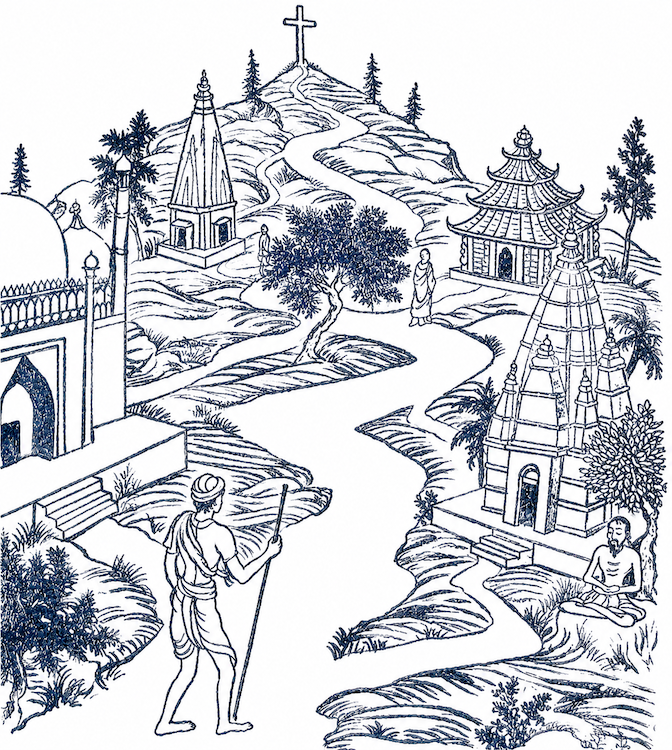
Ye shall know the Truth and the Truth shall make you Free— Jesus Christ (John 8:32)
This bimonthly journal will stand for:
Review and criticism of important events and opinions.
Advocacy of radical and independent thinking.
Encouragement of new experiments, progressive movements, ventures of faith and indigenous efforts.
Promotion of peace and concord among all men on the basis of truth.
Freedom and toleration.
Justice for the oppressed, neglected, deprived, weak and helpless.
Brief articles and concise opinions along the above lines will be welcome and published.
Contributions will be gratefully acknowledged.
Price - Annual 3/-, Single copy -/8/-
Editor - R.C. Das
Khristpanthi Ashram Benares
Sevak Pramukh - Rajendra Chandra Das
Position: a co-operative non-partisan Fellowship of all who confess Jesus Christ as personal Saviour and God.
Objects:
- Study of the Bible, of Hinduism, of early Church
- Purposeful creative thinking
- Adventures in faith under the Holy Spirit
- Indigenous expression of Christianity
Methods:
- Worship
- Fellowship
- Service
- Literature
Membership: Open to Christians and others interested
Activities:
- Evangelism among orthodox groups, and educated men
- Retreats and Conferences
- Lectures on the moral and spiritual life
- Manual labour and service of the needy.
Gifts will be gratefully acknowledged.
Office — Working centre - Library and Reading Room, 129, Dashashwamedh
Printed by B.N. Dutt at THE EUREKA PRINTING WORKS Ltd, Banaras.
Published by Rev. R.C. Das, 129, Dashashwamedh, Banaras.
The Unique Christ
When the Roman Empire was at the height of Glory, with her Caesars considered as gods on earth, when superstition and sensuality swayed over humanity, when it was universally accepted that all roads led to Rome, there appeared a man in an obscure part of the Roman Empire, who changed people’s outlook, who exalted holiness and purity, and who began a kingdom which is of peace, joy and righteousness. Empires have come and gone, and their remembrance was confined to history books, but the empire of this man still endures and will continue to endure to every generation. This man is none other than Jesus of obscure Nazareth of contemptible Galilee.
His personality still remains a mystery to philosophers, scientists and statesmen. Nearly twenty centuries have rolled away since His advent into history, but man has not ceased to consider Him. He came at the focal point of history and no neutral position concerning Him is possible. He demands unquestioned allegiance and not admiration and the alternative is opposition to Him, which has never been successful.
It has well been said that Christianity is Christ and Christ is Christianity. In contrast to the religious systems based on ethics, and it is, the religion of Christ is not only built on Jesus of history but is consecrated and observed by Him.
In the history of any person is always written after he is born in this world. But concerning Jesus, history is His story. At least four thousand years prior to His advent. His story began to be written, and a nation scrupulously prepared and preserved to await His coming into the world. Facts concerning His birth, life, death and resurrection have been carefully revealed to this nation and the Old Testament of the Bible in the scripture of the Jewish nation, contains numerous prophetic statements concerning Him. The four Gospels written by His disciples narrate His story briefly, but even without them, it is possible to know His story for a careful study of the Old Testament.
His going forth has been from everlasting to everlasting, and it fails to fully fathom this infinite personality.
Not only has Jesus been a historical person, but He has been the very cause of history. This Unique Jesus is both the cause and effect of the history of the universe. History belongs to Him and His person. He sums up the very best in Nature, but at the same time. He is the very fulfilment of Nature. Though His personality is a mystery yet. He is the key to unlock the many mysteries in and around man. In one sense He is beyond man’s comprehension, but He is more real than ourselves and in Him only is there a beautiful blending of mystery and reality. Though man may Know Him, yet there is no end of knowing Him.
Never has a man come into the world who has been acclaimed alike by friend and foe, critic and admirer. His friends, who knew Him only so well, could assert that He was sinless and righteous. The whole gospels are full of such assertions. This one Man never openly called others sinners, but His very presence produced the conviction of sin on the part of the people. While teaching us to pray for God’s forgiveness. He never had any occasion to ask for it. Peter has expressed the opinion of all when he wrote; “Christ hath once suffered for sins, the just for the unjust, that He might bring us to God.”
Judas Iscariot, who betrayed Him had finally to confess before committing suicide, that in betraying Jesus he was guilty of shedding of innocent blood. This is wonderful testimony indeed, as it came from the enemy.
It was the Jews who crucified Jesus. Since they were under the Roman yoke they brought Him before Pilot, the Governor, to be examined. But even they, His prosecutors could not challenge His character but only say that He claimed to be the Son of God. And they could not disprove the claim.
The Roman Governor Pilate could not find fault with Him. In his troubled conscience, he could find Jesus as The only Perfect One and thrice delivered Judgement that Jesus was faultless.
Two thousand years have passed by, yet the world has not so far discovered anyone so perfect as Jesus.
But no one spoke like Him. His were the words of authority, certainty and confidence, in contrast to the uncertainty that prevail over even great minds. Neither speculation nor doubts ever passed over His mind. In spite of much scientific progress, doubts still exist, but the words of Jesus have been found even today to be the anchor of every soul.
Whereas the world still admires the Sermon on the Mount, it fails to understand that the One Who preached it is still on the mount and we in the valley. His judgement on human nature have never been proved false. His words were the words of eternal life, and they were of all times and of all peoples.
Around this one man Jesus who never left a written record with His own fingers, have sprung up such an innumerable array of literature that the world is left to wonder at His influence over human lives of all ages.
He taught about God, but the climax of His teaching was at Caesarea, Philippi when He turned to His disciples and asked them “Whom do you say that I am”? No teacher has ever asked His disciples to study Him personally in this sense. Jesus is the subject of eternal study on the part of His disciples, and He is Wisdom indeed.
Not only His life but His death too has been unique. All want to live, and we are born to live. But Jesus said that He came into the world to die. This is astonishing indeed since He not only said it but His whole life in this earth has been lived with that one object of dying for the world. He knew the hour of His death and the manner in which He will die and on the cross. He triumphantly gave up His life saying “It is finished” unlike others who pass away from this world leaving many things unfinished since they do not know they will die. Both in life and in death He thought of others and interceded for the world before the Father.
Consider the astounding statements that came from His gracious lips. He said that He came from heaven, thereby implying pre-existence, told of His experience with God the Father before the worlds were created, preached of heaven as reality, and God as personal loving Father waiting to receive penitent prodigals back to His side, and reinterpreted the scripture in such an astonishing way as to bring them out of the narrow sphere of Judaism to the larger sphere of universality. He claimed to be the Son of God but said that He is the Son of Man too. When teaching others He never gave the impression that He had the necessity to learn from anyone. He taught about the depravity of human nature, the wretched and wicked state of the human heart, and the absolute necessity of being born from above, but never said that He had the necessity of new birth, He being the author of it.
He preached not only as the Spokesman of God but as the only Spokesman of God, too. While preaching of God, he preached of Himself thereby turning the attention of the world to Him. Only an egoist will preach of Himself, but Jesus was never one such as His life bears abundant proof of His meekness and lowliness. He had power and authority, but He never used them for any personal purpose and of the hundreds of miracles done by Him, not one of them could be proved to be done for His personal purpose. He is both the Lion of Judah and the Lamb of God.
He calls man to Him Saying “Come” and promises them peace that passeth all human understanding, joy unspeakable and full of glory and the sure hope of an inheritance that is incorruptible and that fadeth not away.
Religions are concerned to seek the truth, but He is Truth Himself. They seek the way, but Jesus is the way. They talk of life, but Jesus says “I am the Life”. He claimed to be the only way to the Father, the giver of eternal life, and the Door of the Sheep. He is the Bread of Life and the sustainer and satisfier of mankind.
He is the Light of God, the Light of the World, illuminator of the conscience of man and the True Light that lighteth every man that cometh into the world. He that has seen Jesus has seen God and had a proper understanding of God was possible without Him.
Many are the titles used of Jesus in the Bible. He’s the Lamb of God that taketh away the sin of the world. He is the Hope of Israel the Messiah. He is the Lord of the Church and the object of her unstinted worship and praise. He is the Prince of Peace. In short He is all what mankind have aspired and hoped for.
It is through His death that the world is drawn to Him. Pleading for forgiveness for the world even at the darkest hour of His life, when He was nailed to the Cross, He gave His life as a ransom for many. In the words Paul, “Christ Jesus came into the world to save sinners”. The out-stretched nail pierced arms of Jesus are still extended to all who come to Him to be saved. He lives to save to the uttermost all who will come, He having overcome sin, Satan and the grave. He rose in the body, after He died, and is today in His mighty resurrection power to break the shackles of sin over man, because, the icy hands of death could no more hold Him in the grave. He had the power to lay down His life and also to raise it up again. And it is not a dead Jesus but a living Jesus that is preached today.
He came from the bosom of the Father to visit this sin cursed earth. He came as the son of a virgin and gave His life for the world. And forty days after His resurrection He ascended to the Father’s throne from, where He came, leaving His disciples gazing up the sky in wonder. And there he is interceding for us.
To find another like Jesus is impossible. Language cannot express Him, Time cannot obscure Him. Space cannot contain Him. Where two or three are gathered in His name, He is there in their midst. He is omniscient and omnipotent since all power and authority are vested in Him.
Every knee shall bow before Him and every mouth shall confess Him Lord, and that day is not far off, because Jesus is coming soon.
Today He transforms man, bringing him from darkness into His marvellous light, from death to life, and from bondage to liberty. But when He will come again into the world. Nature will no more be red in tooth and claw against man and against itself, thorns and thistles will no more mar the beauty of God’s beautiful creation, sorrow and tears will no more be seen, but the world shall see this selfsame Jesus, whom they crucified, ruling the world in peace and righteousness, joy and contentment, when fear and suspicion shall give way to love and trust and the Law of the jungle shall be displaced by the Law of Love.
Oh, the glorious day, when every eye shall see Him, even they who pierced Him. Then shall they know that He is the Lily of the Valley; the Rose of Sharon, and the Bright and Morning Star. But thank God for those who have tasted Him and found Him as such. Oh! Taste and see that the Lord is good.
Jesus is God’s final message to man. In showing forth Jesus, God has shown all. Heaven bids the world behold Jesus.
Will the religious world listen when God speaks of Jesus “Behold my Beloved Son in whom I am well pleased”! The statesmen of nations are bidden to behold Him as their King. To the man of the muscle, Jesus is the true servant, and to the man of the brain, the perfect and true man.
But no better words could so poignantly express the truth of Jesus as the words of Saint Thomas when he said “My Lord and My God”.
— PAUL SUDHAKAR M.A.
Banaras Work (1955)
Khristpanthi Ashram situated as it is in the thick of Hindu population and in between the Holy Ganga and the Vishwanath Temple for which two main things not only thousands of Hindu pilgrims from all parts of India, but scores of international visitors come throughout the year - has had its responsibilities increased in the period under review in the shape of:
Follow-up work after Sadhu Sircar’s Healing Ministry three years ago;
The increasing number of Hindus - men, women and children - who pour into the Ashram at sunset daily for prayer, Bible reading, and healing. They open out their hearts and wait for solutions of personal and domestic problems in prayerful silence. They have, invited us freely in their homes to hold Christian worship services of which we have gladly taken advantage.
Demand for good devotional literature, for N.T.’s is more today.
Some Christian younger people including students and lay men independent of mission-church severing connections have been coming over for a whole evening on Sunday to join an indigenous form of worship and Bible Study afterwards some of these have been witnessing to others.
The number of visitors, both Indian and foreign, has been much larger.
There have been session of the study of Hinduism for six weeks under the auspices of the Christian Society for the study of Hinduism. On this occasion over a dozen students from different parts of the country and representing various churches have attended. Besides this regular annual session in Banaras, I have been called to conduct shorter courses outside in the Agricultural Institute Allahabad and in Bangarapet, South India Bible Institute.
Visiting ghats, Ashrams, educational institutions, pilgrim centres has been on a reduced scale on account of my being tied to the Ashram more than ever before,
For the inmates of the Ashram - both permanent and periodical visitors - study of the Word of God at 9 A.M. daily and a conversational class on popular Hinduism and Christian evangelism have been regularly held. It has been noticed that Christians smart under the few simple rules of discipline we try to observe whereas Hindus are glad of it.
Prayers are requested that means and facilities for the expansion of the Ashram may be forthcoming according to the will of God. We badly need land in the open air and Sevikas (consecrated women evangelists) without encumbrances and a suitably qualified colleague.
Outside activities. I spent nearly three months visiting the churches throughout South India - Madras, Mysore Kerala, Travancore and Cochin and South Kanara in company with Sadhu Amarendra Nath Sircar. It was a rare privilege and a rich spiritual experience to be able to preach the Gospel and pray for the sick in large congregations in the big cities. The programme was prepared by the Bharat Khrista Sevak Samaj (N.M.S.) in connection with the Golden Jubilee celebrations of the Society. The occasion that took me to the South was the Conference at Bangalore on Christian Worship under the Faith and Order Commission of the World Council of churches. I was invited at this Conference to read a paper on the “Indigenisation of Christian Worship”. Or the way to and back from South I was able to visit Bolpur, Calcutta and South Village Churches and also churches in Hazaribagh and Jamshedpur (Bihar). Our Ashram was the venue of the annual Retreat Conference of the Fellowship of Christ in India lasting for two full weeks. Some members of this Retreat helped in the ordinary work of the Ashram and also stayed longer for a study of Hinduism. I was called towards the end of August to give oral evidence before the Christian Missionary activities Enquiry Commission at Nagpur; attended the Tract Society and Christian Council meetings at Allahabad and Lucknow. It was also a great occasion for me to be attending the final Jubilee celebrations and All India Council session of the N.M.S. in Calcutta as member of the Council and an honorary missionary of the society. To the Council I had the pleasure of reading a paper on “The Call to Indigenisation - Methods of worship and witness”. At about the same time a significant Ordination Service was held there under the auspices of the Fellowship of Christ. For this and for the N.M.S. it was good to see many associated in spirit with the Ashram in Banaras - Sadhus Sircar, Hulder, Ishananda, Sri C.P. Michael, Sister Anukona Brothers, Pramanik, Haripani Jennah, Santosh Sircar, Amarchand, Jogesh Sircar, Duraisamy, Joel Lakra, Prio Bairagi, Keshab Mondal, Birendra Nath - from different parts of N. East India, E. Pakistan and South India.
Visitors to the Ashram during the year for short or long per included the following: Sadhu J.N. Hulder, Brother Amar Chanda Mondol (Dum Dum Cantonment); Sri Bibhudan Roy M.A., B.A., B.Ed. (London) and Miss Jyotsna Ray (24 Parganas) Brother S.K. and Sister Sircar and children (Bolpur); Sri M.J. Mukerjee, M.A., L.T. Retired Deputy Director of Education (U.P.) and President of Christian Union (U.P.) M.L.C.; Sri Surya Lal Bhattacharya, Manager Christian Ashram (Vrindaban) Rev. C.H. Lochlin (Jullundur); Miss K. Sircar, N.M.S. (Allahabad); Dr. Bouquet (Cambridge); Doctors Hui Tema and Esther Shoemaker (Ankola, S.I.); Rev. D.G. Sheriff and party of theology students (Bulandshahr); “Soul Clinic” Party (America); Brother Gnansumdaramany N.M.S. (Madras). Seven Students and one Professor from Bishop’s College (Calcutta); Brother Cameron George Cordice (West Indies).
In the multifarious activities in different places and under different circumstances we have been very conscious of the guidance of the Spirit and the presence of God in our hearts and in the quiet of the small Ashram prayer room. His Holy Name be praised for health fulfilment of our needs, and for peace and joy in our spirits.
— R.C. Das
129, Dashashwamedh, Varanasi, (Uttar Pradesh), India.
10 January 1956
To Fellowship of Friends of Truth
E.F.T Pamphlets: No. 3
The F.F.T., at its Fourth Annual General Meeting held at Delhi, on September 11 and 12, 1954, agreed on the following statements on Conversion and Military Training in India:
1. On Conversion
The Fellowship of Friends of Truth, at its Fourth Annual General Meeting, held in Delhi, gave considerable thought to the subject of Conversion, as it is a problem perplexing the minds of many in the country at the present time. India has the privilege of being a country in which almost all the living religions of the world have met. The working out of right relations between the peoples of these faiths, and also with those who do not profess any faith, is of the utmost importance for the development of the nation. The Indian tradition is one of immense generosity of spirit, and of reverence for all men of God; yet in the duty country today there is a growth of suspicion, intolerance, irreverence and hostility within and between religious groups, which can only jeopardise that great Indian tradition and retard India’s contribution to the world. If in the political field it is necessary to find a basis for co-existence for differing ideologies, how much greater is the need and the possibility of finding such a basis for co-existence in the religious field! Nay, there must be a basis on which the great religions cannot only co-exist, but should be able to contribute, from their great insights and heritages, to the common growth of man to a fuller and richer life. Religion must serve to purify the lives of men and women everywhere, and raise them to a level where the essential unity of mankind is experienced and realised. Our call to men and women of every faith at this time, therefore, is to re-examine the tenets and practices of their faiths, to see to what extent they fulfil the deepest needs of man and further the development of his sense of oneness.
We realise that the attitude towards the question of conversion is one of the vital matters upon which there is need for a new and deeper understanding. Misunderstanding and wrong presumptions of others attitudes, as well as wrong attitudes in ourselves, have led to much of the prevailing atmosphere of suspicion, irreverence [damaged text] and hostility in the country today.
True conversion is the need of us all, and to many [damaged text] experience. But such conversions do not ordinarily call for [damaged text] in religious affiliation. In fact, the uprooting of individuals and groups from their ancestral traditions often has disastrous consequences, Real spiritual conversion might in come cases involve a change of religion and this might well represent a step forward in the path of life, drawing man into a deeper consciousness of God and a closer communion with fellow believers. Such conversions can occur in any religion and there should be the fullest freedom to exercise this basic right of man. But the attempt to draw people from one religion, or of no religion, to another, merely for the sake of increasing the nominal strength of the latter, has its sanction neither in true religion nor in common sense for it not only does not serve the ends of true religion, but creates social conditions fraught with immense danger. Some there are who believe that a nominal acceptance of another religion by individuals and groups brings them under a new influence and atmosphere which may lead to true salvation. There should be nothing to prevent such nominal acceptance with such a hope, but in such cases the use of coercing methods and material inducements should be banned; for it is in the use of such unholy methods that there lie the seeds of conflict which no society can tolerate.
Our attitude is not one of opposition to conversions as such, but ours is a plea for a new approach to religion, by which all will appreciate the great contributions made by the religious traditions in all ages and climes, contributions which they continue to make. We plead for a continuing quest for deeper fellowship beyond the barriers which the different religions have tended to set up between themselves. Our plea is for a new reverence for all religions, for the opening of windows all round, that the light from each may shine upon all, helping man to a complete understanding of the truth within, and guiding us all together to a fuller realisation of the life Abundant.
We abhor all conflict and antagonism in the name of religion, from whatever causes that may arise. We abhor any attempt to exert external force or pressure on the conduct of religious groups; for we believe that [damaged text] approach to this problem will encourage people of all faiths to approach for a purification from within of each religious group. Our prayers and sympathies are for all who feel concerned to raise this [damaged text] conversion to the deeper levels of true Religion and who [damaged text] for its right solution through an inner purification within the group to which he or she belongs.
2. Military Training in India
The fellowship of Friends of truth, which is an organisation seeking to bring together people from various religious backgrounds, in “a common endeavour to realise the good life for all through the way of truth and love”, wish to express its great concern over the growing tendency to militarism in India. We strongly feel that this development in Indian society should not go unchallenged, especially by those who have seen light through the life and message of Mahatma Gandhi. Military training for youth is claimed to serve the urgent need of providing much-needed discipline in Schools and Colleges, and to provide for adults an outlet for patriotic endeavour; but we submit that very careful consideration should be given to the implications of a pattern of training which, as History shows, will not serve the supreme cause of Truth and Love. Military training is necessarily related to war, potential or actual, big or small, defensive or aggressive. Modern war, as everyone will admit, is diabolical in its consequences, and is a total denial of Truth and Love, however glamorously it may be presented to its potential trainees and victims. We do not admit that the noble purposes of training, discipline and patriotism can only be fulfilled through our youths and adults being submitted to a course of training which involves such hindrances to the realisation of the good life for all mankind. We, therefore, urge upon the Government and the people of India to discover ways and means which will enable our youths and adults to secure such training, discipline and outlets for patriotism, as will truly develop their characters in an atmosphere of Truth and Love. We suggest specific training for Village Service, or disciplined training on the lines of the Shanti Sena or the Boy Scouts and Girl Guides Movements, as constructive alternatives to stereotyped military training.
True defence lies in the building up of Truth [damaged text] the people, and not in the accumulation of armaments [damaged text] use of weapons of destruction. May the India of Gandhiji [damaged text] the world in this matter and be a shining example of creating Pacifism
Indigenous Methods in Evangelism
Introduction
Methods spontaneously follow from the object, nature and spirit of evangelism.
They will also be regulated by knowledge of actual conditions needs and challenge of the field. Hence, a study of Hinduism and Hindu Society is necessary for discovery of suitable methods.
We need not imitate foreign or indigenous methods. An experience of the biblical revelation and an intimate knowledge of men will in combination lead to a way of evangelism natural for India.
The trouble is that most evangelists lack either or both of these essential qualifications.
External Methods
Life itself is the best medium of communication. Propagation of truth is natural when there is a thorough identification in the mode of living in the social and cultural field except of course where there is clear clash with Christian principles.
Rich and chaste literature of the popular variety is one of means of conveying truths, A new type of Christian literature with a positive message should be produced-in the form of popular story, novel, drama, poem, song, dissertation, sermon etc. This should be original, and not translation-however free-in the various languages of India. There should be no suggestion of a comparison with another religion or teacher. The fundamental tenets of Christianity and the traits of [damaged text] should be expounded. So far Christian literature has been short of demand and these ideals.
Indian music in all its variety and depth both in the form of lyric, Katha (sung word), and Kirtan (corporate and enthusiastic singing) is the most attractive method of populating Christ and his faith. Indian musical instruments should be extensively used. In Schools, Colleges, Churches, Choirs, indigenous music should be developed and individuals also should be encouraged to cultivate musical talents. There should be no compromise between Indian and English music. Funds must be made available both for literature and music of the original indigenous type.
Dramas, Yatras (representations of great religious heroes), depicting the lives of saints and biblical figures may be staged with great effect. But no foreign machinery or other helps should be brought in.
Worship (in Church, home or institution) should be the best way of showing the inwardness of Christianity and the Christian’s devotion to his Lord. (Vide separate sheet on Indigenous worship c/o “Seeker” Haimant 1953. Vol. 7. No. 6).
The Ashram (of the real Hindu type not just a foreign mission with the cover of the name - Ashram) should be the best all round means of focussing the vital and creative elements of the Christian faith and way of life. It will concentrate on simplicity, sacrifice, spirituality, service, silence, meditation, high thinking and joyous victorious living all in the same atmosphere. (Vide separate article on Ashram c/o “Seeker” Winter 1950-1951 Vol. No 3). At the present time in World’s history and in the peculiar conditions of India there can be no more effective way of disclosing Christ to the East than the Ashram with its hoary tradition.
In the interests of peace, good will and the deeper aspects and prestige of the Christian message the barren methods of street preaching, public debates, the ordinary cheap colportage, reference to other religions must be given up. Even Melas (religious fairs) should not be aggressively invaded by an army of often unwise and haughty preachers. Preaching should be confined to quiet places, Church, home, institution, tree shade, mountain side, river side, sea side, boat, and Ashram. If there is realty and sincerity Hindus will flock.
Internal Methods in Ideas and Attitudes
The Evangelist must be called by God. This one [damaged text] rule not education, call of men or mere wish to do good to others etc.
He must be imbued with the spirit of voluntary service and not of job seeking. And it must be done at a sacrificial level. In the Indian eye renunciation is the one thing that entitles the evangelist to proclaim his message. Otherwise, even if he claims the Commission, the Church’s ordination etc. his words will fall flat.
One good way of winning the Hindu to a consideration of Christ’s claims on life is the recognition of common grounds or points of religious, philosophical or sociocultural. On this basis difference and distinctiveness are more correctly and impressively appreciated, In the present-day world especially in India it is harmful to all parties to accentuate differences.
Indian Christians should feel proud of their country and live in love and peace with their neighbours in spite of occasional possible provocations. Foreign habits of living should be quickly discarded as they indicate attachment to, and interest in, the West. Habits of meditation and observance of silence should be cultivated so that they may attain peace in their hearts. They should not condemn Hindus as heathen even in their own hearts and should withdraw all Christian literature casting a reflection on other faiths. They should give up their diffidence and inferiority complex or conceit and superiority complex and participate in national activities and thus become natural citizens of India.
Evangelists should, firstly, be men and friends not be always conscious of striving that they have to convert others. They should witness publicly and frankly but in love and humility. Their Christian convictions should be naturalised in their hearts. The desire for conversion should be inherent in the exposition of mere words. Then the Hindus will regard Christians as “Siddha Saints” or “perfect saints who have attained”. Then their preaching backed by life will make deep furrows on Indian mind and heart.
— RAJENDRA CHANDRA DAS (Sevak-Pramukh)
Khristpanthi Ashram, Baranas
P.S. This is part of the Findings of the Retreat Conference held at Dehradun in June 1954 under the auspices of the “Fellowship of Christian Ashrams”.
Caste Among Christians
A caste among Christians is a shameful thing - and it becomes much more so when it is pointed out in Public by a non-Christian. In the course of a debate in the Lok Sabha last Friday on Mr. Dabhi’s Bill to remove recognition of caste distinctions in Hindu society, Mrs. Anusuyabai Kale (Congress, Madhya Pradesh) said: “Even among Christians the caste system has its grip” ‘quoting the instance of a man who had written in his will that his son would inherit only if he married a Brahmin Christian.’ When chapter and verse are thus quoted, there is no use of denial or protest. The finger has been placed, kindly or artfully, on the open sore.
One thing was clearly revealed in the debate, that is, that the evil of caste had a universal grip. As the mover of the Bill put it. “One finds caste patriotism even among the more advanced Hindus.” Just so. Substitute the word ‘Christians’ for ‘Hindus’ and you have a true picture of the Christian community also.
There are castes within castes among Christians, species divided into subspecies, one having nothing to do with the other, so that the Tanjore species looks down upon the Tranquebar one and both are looked down upon by the Tinnevelly species, which considers itself derived from the original tap root. It is so with another Christian caste of which we can speak with soma authority. Though descended from the same tree, one subspecies in it will consider itself superior to the other; the superiority having been established by reference to some musty old book. The atomic age may pass into the cosmic ray age, but there will be no inter-marriage between the subspecies of this caste.
The Christian Church too is infected by the disease of caste, and is in some ways responsible for it. It used to be the peculiar pride of one of the Christian Missions working in South India that it specialises in getting converts from the priestly class among the Hindus, but very often these converts were allowed to retain, if not their caste surnames, their old names with only a baptismal prefix ‘Paul’ awkwardly added to the old one.
Within the Church itself, in one or two places, until recently, a separate Communion Cup for the caste Christians was not unknown, and in the Roman Church, we are told, there are still honorary caste Christians. In some Church Registers, one sometimes has a caste suffix after a name. Caste patriotism, it will be freely admitted, influences church committee elections, and sometimes the choice of a clergyman. It is high time these evils were exposed, extirpated and - oh, for a Dr. Johnson to destroy it with a final sonorous word!
It is also our belief that the Christian who uses the caste suffix on his sigh board or the person who publishes his caste from the house top, as it were, in a wedding notice, should be treated as ‘untouchables’.
Much of this evil we think is due to the Church’s indifferent attitude. Does it ever speak of it? Is the Christian Gospel ever related to it? When Mr. Dhebar, the Indian National Congress President, spoke at the Avadi Session with a religious zeal as to how the Government was determined to fight this evil in the country and win, was it ever caught up and echoed from our pulpits? Or are our pulpits afraid of the pews, and are soft-pedalling for safety? The great reformers of our country in recent years, like Raja Ram Mohan Roy and Gandhiji himself, derived their inspiration for social reform from the Christian gospel, and yet within the Church itself the note is discreetly muffled, if not muted. When will the Christian Church in India rally the hosts for a relentless fight, in which the State also is engaged, against an evil which is not only a blot on society, but one that mare the very name of Christ?
— The Guardian
Notes
Confusion of Tongues and Brains
Independent Indian Church: Speech of the Moderator of C.S.I. at a meeting of the Indian Christian Association, Madras at the Y.W.C.A. under the presidency of Dr. P.V. Cheriat (Speaker, Madras Assembly). “Independence is an inevitability. The whole Indian environment demands it. A free India has forced rethinking and readjustment on the Indian Church. Although the Constitution was guaranteed freedom of faith and the right if conversion, resurgent Hinduism is becoming more and more impatient especially with missionary activities. We feel that it will be the duty of missionaries to find new ways of making their contribution to India, as true Yoke-fellows in a partnership”.
— The Guardian 14 October 1954
Christa Seva Vidhyalaya (for women) in Madras, 7/2 Cottage Road, object - that
Indian Christian leaders be well-grounded in Christian Theology, evangelism and pastoral organisation.
To travel round different missionary stations in order to study missionary methods.
Findings of a study group on Evangelism held at Rajpur Dehradun, March 2-4, 1955 attended by 15 persons from Uttar Pradesh, Delhi and Nagpur. Nine subjects were discussed such as the present situation, Early Church, Urban and rural congregations, indigenous methods, social service, literature, Training courses. Among findings are noticed some strange creatures described in American jargon - Visitation Evangelism as used in other lands, Preparation Meeting, The Retreat and Study Centre to provide funds for the meeting, Visitation evangelism to be shared and evaluated in a meeting, preparation of materials and literature, training of new converts and welcoming them into the life of the church, courses on Christian approach to the non-Christian world, etc.
Editor’s Comments on the Above
There is a radical contradiction of thought here. Independence and partnership do not go hand in hand. Only equals can be partners. How can the Indian Church, recipient of money and personal service of missionaries be a partner with those who give money and service with oversight and control. Partnership under the weak condition of the church really amounts to a relation of slave and master. Independence, if real, ought to mean cessation of administrative and financial (formal) connection. Missionaries should not have any decisive position within the church if it is intended to be Indian. Their proper sphere, a very large and open field - is to preach the simple and direct Gospel among Hindus and Muslims and Christians too. If they have money and the Indian church needs it [damaged text] objects it should be given without conditions attached to Christian Charity.
While all missionary organisations loudly proclaim that the leadership of the church must be Indian they take care to include missionaries and train Indians exactly (if not worse) as Europeans or Americans with their own theology, ideas and methods of evangelism current in their countries and their church politics so that these westernised Indians may carry on the western patterns of work. This amounts to deceiving the Indian church. There are too many and diverse organisations like this creating a confusion among Indian Christians. Is not the Word of God in the Bible working in the hearts of regenerated Indians enough to enlighten them and endue them with the power of the Spirit so that they may lead? Are they not denationalised by this foreign training?
There are many other centres like the one at Rajpur, some of them very old. We have observed that for half a century they have cogitated on evangelism, and it has become less and less until today there is hardly any to be seen. Yet they organise and train for evangelism-which costs lack of rupees, actually. But in how many places, how many Christian brothers and sisters actually go after soul winning for Christ with love (not contempt) and humility (not pride of having) in their hearts. Of course, the whole system has provided livelihood to thousands who otherwise would have done nothing in the world. But why disturb their simple minds with these learned things. If they have found their personal saviour in Jesus they will do better if left to their Bible and the Holy Spirit. If not, if they are just nominal, no amount of Retreat or study or prayer or discussion at hundreds of conferences will avail anything. They will just be “sounding brass and clanging cymbals”. Approach to the non-Christian world! Too high and dry and far! Begin in Jerusalem. Charity begins at home.
Some Plain Speaking. A man of conviction writes to a fellow thinker - one to another.
Your kind letter dated 25th May with the article for the Guardian has thrown me into serious thinking. It is my fear whether you are aware that these statements by the Central Administrative Bodies of the Protestant and Catholic hierarchies are intended to placate the power that be. The Catholic and Protestant heads of their respective central agencies, appear to view with each other for securing the maximum concession and facilities from the Government for getting foreign funds and helpers from abroad in order to strengthen their hold upon the credulous Indian Christian nationals. By increasing the personnel of these Central Agencies, such as The National Christian Council and the General Secretariat of the Catholic Bishops Conference, with ‘Yes’ men of the Indian nationals, they have become the mouthpiece of the third great minority of the Indian Nation. But what is actually being done within the four walls of the Churches and Mission compounds and Catholic Institutions is mostly un-Indian. The very Indian Christian intelligentia have become so denationalised as to look upon the foreign founders and Pope of the respective Missions as the accredited authority for ruling on what is Christian faith with a readiness to treat the rich heritage of India’s culture as heathen. I am compelled to make these observations from my personal knowledge and experience with even the younger generation. The building up of the spiritual and moral life is completely neglected and for the credulous Christians in India, and elsewhere it is the kind of life, round and round in aimless drudgery, round and round in the same old rut of sin from which we want to escape and into which we continue to run. But the priest-craft has made a safety valve of confession and absolution as a passport to heaven. It is not for this kind of Salvation the Great Son of God and His true Devotees laid down their lives both in the East and the West.
The Great Bharat has no use for such a group of Christians and Christian hierarchies. As a member of the Bharat Khrista Sevak Samaj, I have been led to outline my conviction and faith in a few articles in through the columns of its official organ - The N.M.I. The foreign Christian denominations have done such disservice to the cause of else unity among the Christians as to suspect their loyalty to Christ and country. It may be said that their loyalty to their denominations and foreign missionary system excels their loyalty to [damaged text] Master and Lord Christ. This is the characteristic position of Indian Lutherans. The Policy of the N.M.S. (Bharat Khristya Sevak Samaj) is, among other things:
- To foster unity and cooperation among Christians and
- To promote a sympathetic understanding of religions of India and to adopt as far as possible indigenous methods of work.
The German and Swedish missionaries are promoting their own music among these congregations by training Indians abroad. They have separated from the Central N.M.S. and run a section of one under the name of Lutheran N.M.S. I am pointing these things so that the Lord may open your mind to understand the real situation among us. Our Heavenly Father has a special mission for you and yours for the people of our country. The evil done by the Luthern Missionaries among our people may be undone by those awakened German philosophers and thinkers who, you say, look up to us for new light.
A Family of the Holy Spirit: A beautiful name and a creative idea. We have known Brother Murrey Rogers, the leader, to be in dear earnest about certain fundamental things, and we have highly appreciated his deep search and his great sacrifice in practice. He has gone, to gain discriminating experience, Wardha, Sevagram - Gandhiji’s Ashram and lived in Rasalpura near Itarsi in a small village on a par with other villagers where we have seen him practising extreme austerity and penury in order to identify himself with the poor and the suffering - the sick and the oppressed. We have been nobility in his soul and magnanimity in his heart.
But we have failed to understand, as also in a few other cases why a person of his nature and ability, a spirit kindred to the best in the Indian church and the best in the spiritual culture of India - why a friend should have thought fit to have started an Ashram on his own at Kareli P.O. (Bareilly) after some years of listless wandering. We thought in these days and in recent years when there has been too much loud and emphatic discussion in conferences and missionary reviews about partnership or cooperation or identification between the older and the younger churches - how such a thing can happen is an enigma. We have no right to question the motives of anyone. But a missionary in India is not just a private person. His conduct and activities have inevitable repercussions upon the country, upon the country, and the Indian Church in particular. We should have thought that a man of Brother Murray’s spirit would join hands with his spiritual resources with Indians who have been struggling with odds to interpret the universal Christ in the Indian setting. Because that is the supreme task of the Indian Church today? There are so many Ashrams and other instructions initiated by Indian genius up and down the country. The National Missionaries have been working with great ideals and there are other indigenous missions connected with Orthodox Eastern and other Indian churches. It would be worthwhile for missionaries to reinforce with their contributions the national spiritual forces and ventures. It may be pointed out that many missionaries are serving with and even under Indian Principals in Schools, Colleges and under Indian bishops and superintendents. But here they are within their own system supported by their money. There is a serious difference between the two. There are some Ashrams modelled after some western Order and principles led by missionaries such as Christa Seva Sangha Ashram - Poona, Shishyashram Tadagam (Coimbatore). These may not last because their setup and ideas have not issued from Indian hearts. If they do because of external prop they will remain ineffective. It is a vital and pertinent question whether the missionary should continue, and even multiply, his own show - or contribute with his mite and mind to the indigenous Ventures.
The Evangelical Fellowship of India and similar bodies. At the present time there are too many small organisations represented throughout India. They have one strong point. They are all evangelical in a broad sense as distinct from sacramental or sacerdotal. But they differ from one another in many other respects. Some of these have grouped themselves under the above name. It is a good sign. We get their reports of Conferences. But are all forces in? They could render a great service to the Church as a whole, to the country, and supremely to the cause of the Kingdom. The more organised churches, because of their hierarchy and catholic or orthodox views wrongly interpreted, are apt to lose the evangelistic fervour, as history shows, and become introverted. The Fellowship should approach and accept all the smaller bodies on a broad enough Christian basis. Men will never agree on every thing as they have never done before. If they accept the Open Bible as their basis and source of authority and the Holy Spirit as their Guide, you can rope in the [damaged text] the Pentecostal if they would be willing to cooperate on the supreme issue of evangelism in India. There is no need to oppose the N.C.C. as it is a non-theological body. The evangelical forces, if harnessed together for a constructive and positive presentation of the Gospel, will be a needed corrective to the position of the organised churches. Let someone, or a few, in the Fellowship make a move in this direction. Secondly this should not be confined to foreign mission, but cooperate with indigenous bodies like the N.M.S. and the Fellowship of Christ in India.
The Process of denationalisation: how it started and still goes on.
It started early in the pioneering age of the Christian enterprise in India. The prestige of the British Government and of the missionaries its allies and the lure of western civilisation was too great. Imitation was the order of the day. Christianity came with many trappings and appendages and not in its simplicity and suffering. It came with a sense of victory and spirit of aggression. In the mission compounds, in the church life, in the schools, colleges and other institutions, in the mission offices the missionary delighted to see his Indian employees, in whatever capacity, dress in European style, talking faultless English and aping every European custom and habit. The greatest damage to the Indian mind, soul and heart has been done through western, nationalistic, church systems, forms of worship and theological studies. The Indian Christian mind has never been allowed to rest and pause and think about his own country, its history, literature, philosophy, faith, customs and manners - its heritage in culture and thought. Every thing in western art and culture has been exalted. Even the political systems have been borrowed. Internationalism has been exalted over nationalism which has always been decried. By internationalism has been meant western nationalism in fact. Ecumenism is practically meant to be the church polity of the west in some form or other. The Indian form does not exist yet or is taboo. We can give score of instances to illustrate these points. This process is still going on very rapidly in theological institutions. A false idea of internationalism and nationalism has been taught to spread. Has internationalism and meaningful content without strong and living nationalism? Why should eastern nationalism only be exclusive and aggressive? Is not internationalism aggressive and exclusive today? What missionaries and other westerners such as scholars and statesmen and publicists - parade as internationalism is, but western nationalism magnified and sublimated. Asian nationalism is only rising today. It has not developed fully yet. It must make its contribution then internationalism will be perfect and true. Now the called ecumenicism or internationalism or universalism (such as the United Nations Organisation and the World Council of Churches - its concrete forms) is but perverted western nationalists put together. Let the Indian Christian mind freely and become indigenous first and then the ecumenical conception will be real.
Billy Graham
While there are hundreds of servants of God who have arisen from the ranks of the church in India but do not get a passage through the churches to preach the Gospel of repentance and salvation it is strange that an ambassador of Christ from abroad receives such a wide welcome and sensational publicity at a great cost from the leaders of mission church system. How far do those coming from the West represent the humble and loving Jesus - “the man of sorrows acquainted with grief” and the man “who had nowhere to lay his head”? Billy Graham ought to be a Sanyasi traversing the villages, hills and jungles of India quietly breathing out the message of the Cross on which the Son of God sacrificed his precious life for sinners - like Vinoba Bhave and thousands of others - on a vow of renunciation and love. On the contrary, Billy Graham is taking an aerial view of this country touching its strategic points. The grand paraphernalia he carries with him and his manner of presentation of the Gospel, give an aristocratic view of Christianity. Such methods cannot promote a healthy growth of spiritual life in the church.
The whole enterprise shows that the educated Indians in mission employ are slavish tools of the West unable to appreciate the country’s genius and the native talent of the Indian church. It is high time to be independent India such perversion of the simple and pure reliving the Bible and such slavish imitation of westernise with a question motive ceased for good. Revival must come from within the church and not from outside.
Indigenous customs and ceremonies. Every country, nation and culture has its peculiar expressions of its life and thought. During the last nearly two thousand years wherever Christianity has gone East or West, North or South, it has assimilated the forms of the particular country’s cultural life. It must do so in India. It has not started doing so yet. One section of the Church has been in India for well over sixteen centuries and yet it is outside the dynamic culture of India though it has gathered round its neck some evil practices and ideas of Hinduism. The process of nationalisation requires discernment and discrimination involving judgment. But it has to be done. The spirit of inclusiveness and assimilation enriches the life of the church and helps her preserve whatever is good in human achievement in the fields of knowledge, art, literature civilisation etc, Take for example an external thing - the manner of welcoming a visitor, showing regards its parents, leaders and spiritual guides in India. We garland them and put chandan (sandal paste) or kumkum (saffron) on the forehead. It has nothing to do with religion or spirituality or theology. It is a pleasant social custom. There are a hundred and one expressions, forms, posture and attitudes indigenous to this country. Take another example of an inward emotion and idea. On the whole, the Indian has an attitude of Ahimsa (inviolability of life) and Adhyatmikata (primacy of the spiritual). These are inborn and inherent in the life and conduct of the Indian. If in the life of the church these things have been suppressed it is the duty of the leaders of the church to allow its members to live the natural lives in the Indian climate by withdrawing the unnatural foreign inhibitions. Otherwise, it will be injurious for both church and country.
News, Report, Comment
Khrista Sangha, Jamshedpur.
10 January 1956.
Dear Brother Das,
As desired, I state below a concise report of our Sangha on Christmas and New Year Day’s service and activities.
We have two centres of Sunday Schools. There are 31 children in all. They had as usual an exhibition of their own hand crafts for raising a fund to the aid, of the Haluaghat Ashram Pakistan on the 17th December 1955. Net sale proceeding amounted to Rs. 25/- which immediately was remitted to the N.M.S. Committee, Calcutta for the needful. The children’s hand made Christmas cards, paper work, sewing, lucky bags, sweets etc. were much appreciated. Local neighbours and some members of the Sangha were the visitors. The entire managements of the affairs was by the children themselves even the accounts.
On the 18th December 1955, there was a Christmas programme sponsored by the Jamshedpur Indian Christian Association. Our Sangha had taken part in prayer and Kirtan. In a Public Hall the programme was staged free entry to all. Object of this was to give impression the real meaning of Christmas and to create feeling among Christians that “we all believers are one in Christ”. The large Hall was overcrowded. The function held very orderly for 3 hours starting at 4 P.M. All churches in Jamshedpur took part in the programme which included, besides songs and prayers, three pageants and one tableau.
On the 21st morning our children had their picnic managing all by themselves and enjoyed much.
This year many of our members were out of station to home on leave. Some relatives on the other hand came from Patna and Calcutta and attended our services with pleasant heart. More than 90 including children gathered together for the services in this yard of a house. Among them there were several veterans.
More than 50 children had been treated with sweets and toys.
One of our veteran members Mrs. Sukeshini Biswas wife of late Dr. Naresh Kr. Biswas, Alipore, Calcutta, aged about 70 blind with age, expired on the night 28 December 1955 by heart failing. It was a great shock to all.
The Holy communion service was performed or the New Year Day. Rev. S.J. Pramanik conducted both the services with very much appreciation. The message received from the Rev. R.C. Das read out and this surely encouraged us all.
With my best love for you and the inmates of the Ashram.
Sincerely
Sd/- Pramanik.
The Next General Elections
CRUSADER, Delhi, August 1955
Editorially Speaking
With the experience gained during the last general election Christians in India, should be on their guard to face the coming election with unity, self-reliance and determination; mindful of the dangers, disunity, wrangles and personal prejudices, which so adversely affects the Christian people, in North-East India, at the time of their general elections.
Away back in 1946, our great Christian leaders, men like Dr. Maharaja Singh, Dr. H.C. Mukarje and late Mr. Sinha, surrendered our people’s future in favour of the Indian National Congress, and never did they once ask for any special favour or privilege, as has been the case with other minorities in India. We, Indian Christians are against communalism, provincialism and casteism, for these three are deadly poison to the life of any people and country.
Under the existing political conditions, within the country strongly advocate that Christian associations and councils, in our State in India, unite for setting up Christian candidates for controlling the next rural elections in their respective State, and for that avowed and express purpose, wait upon the Congress President of their State, to arrest upon the Congress High Command the advisability of giving Congress dockets to Christians for the next general elections in 1957. Such as we emphasise, must not be on a communal basis, but as members of a great nation to help advance the cause of India’s national unity and progress.
(The procedure suggested and the mental attitude behind it is self-contradictory. It is pure and simple communalism. If Christians entered into the life of India and rubbed shoulders with Hindus and Muslims, the whole population would set up many candidates who are Christian. It has been proved in some cases. - Editor Seeker).
English Convocations Csi Decision
The Calcutta, Diocesan Magazine, August 1955
The English Convocations of Canterbury and York met early in July. The following resolutions were passed unanimously.
Members of the Church of South India who are communicants in that Church may, when in England, receive Holy Communion in the Church of England.
Members of the Church of South India who become permanently resident in England and desire to be habitual communicants in the Church of England shall be required to conform to the regular disciple of the Church of England.
Bishops, presbyters and deacons of the Church of South India may be invited to preach in churches of the Church of England with the permission of the bishop of the diocese.
Any bishop or episcopally-ordained presbyter of the Church of South India may be free to celebrate the Holy Communion in a church of England at the invitation of the incumbent, with permission of the bishop of the diocese, subject to his willingness, while in England, to celebrate in Anglican churches only, and, where these apply, to the provisions of the Colonial Clergy Act.
The bishop of a diocese may at his discretion authorise the loan of a parish church in his diocese from time to time for the celebration of the liturgy of the Church of South India by a bishop or Episcopality ordained Presbyter of that Church.
A bishop or episcopally-ordained presbyter or deacon of the Church of the Church of South India who desires to officiate as a bishop, priest or deacon of the Church of England, may be allowed to do so provided that he has received such permission as may be required under the Colonial Clergy Act.
Other ministers of the Church of South India who desire to enter the ministry of the Church of England shall be subject to its rules and regulations regarding admission to its ministry.
Bishops and priests of the Church of England may accept the hospitality of the Church of South India for celebrating Holy Communion within it.
Members of the Church of England who visit the territory of the Church of South India may accept the hospitality of that Church for receiving the Holy Communion within it.
(The above represents a religion of law and not of grace. It is exactly parallel to the Hindu caste which prevails in the social life and not in religious or spiritual sphere. One cannot restrain a sarcastic smile at these minute regulating spiritual life. May God reveal his wonderful freedom under grace to these “blind leaders of the blind” who bind heavy burdens for the weary masses. - Editor)
In the Fellowship:
The return to India of the Rev. N.K. Dutt from Europe and America after over a year’s stay is very welcome. He has recently been in Banaras conducting a fortnight’s evangelistic meetings and many have been blessed through his ministry.
Acharya Das has been to Hyderabad (Deccan) to attend the Executive Committee of the National Missionary Society. On the way back he met a group of independent Christians with whom he spent a Sunday.
After his trip to Hyderabad State where the Arya Samajists demonstrated [damaged text] Sadhu A.N. Sircar again went further down south in Madras State. Recently he has been observing two weeks of fasting and prayer for the observance of his birthday in Madras city.
Swami Atmananda (Sadhu J.N. Hulder) spent Christmas and New Year’s Day in is Ashram at Sadarpur (Barisal), E. Pakistan. He reports fatal failure of crops but increased interest in the Ashram life and priorities on the part of the Christian Villagers. He is expected back in Calcutta soon.
It was a great privilege to receive in Banaras Dr. Victor Paul Wirewille with his wife and three children and the Very Rev. J.S. Williams Archpriest of the Hindustani Church and acting Chairman of the Federation of National Churches in India. Dr. Wirewille is intensely interested in the growth of the indigenous Church in this country that will be independent, self-expanding and witnessing. Before coming to Banaras they had been to South India, and Calcutta where our brother Rev. J.C. Sircar came in touch with them.
Ishananda S.K. Paul has been at the Puri Ashram but is soon going on a tour.
Brothers Amar Chand and Jogen Mondol have been to the N.M.S. House, Madras and visited the Tirupattur Ashram lately. They were able to join in the Birthday celebration of Sadhu Sircar.
In December Acharya Das paid a visit to Kanpur and there met Brother Monohar Lall of the Fellowship Committee and twice addressed the independent brethren of whom Brother Anson is the leader.
The Ashram in Banaras had the pleasure of welcoming to its fellowship a remarkable young man from West Indies - Mr. George Cameron Cordice - whose grandfather, a Sikh - left the country as a leader of Indian labourers to the British Colony. Brother Cameron has travelled extensively in the two Americas, in Europe and the Middle East exactly like an Indian pilgrim very much on foot. He is an earnest seeker and student of thought and affairs of men; as he went out of the Ashram he left behind an aroma of true Christian love and humility. Another young man - Syed Stephen Nurul Alam - a Muslim convert from Cox’s Bazar (Chittagong) has added to our joy by his strong Christian conviction and evangelistic grab. May God guide and prepare both these young servants of His for His full ministry.
Brother Bibhudan Roy has continued in his Work as Headmaster of a High School in Mathurapur and has maintained his health and strength.
It was good to meet Brothers Duraisamy and Michael at Hyderabad.
Sister Komolini Sircar [damaged text] is to be congratulated on her appointment as General Secretary of the N.M.S. even though for the short term of a year.
The Rev. Joel Lakra is now the Principal of the [damaged text] Seminary at Ranchi; may he be used of God in shining of the [damaged text] and zealous evangelists.
The Palak-Pramukh of the “Bharat Khrista Sangha” - Acharya Das - together with Swamy Atmananda, Ishananda and one or two others expect to take a round tour in Bihar, Orissa and Bengal. May it be that through their ministry of the Word of God the unity of faith may be strengthened and the cause of the Indigenous Church promoted.
It is also expected that the annual Retreat Conference of the Fellowship may be arranged in the summer (preferably in April to May) in some cool centre in N.E. India. Friends desires of attending should write to Acharya R.C. Das, 129, Dashashwamedh, Varanasi.
Bharat Khrista Sangha
The Fellowship of the Christ in India
[damaged text] are Christian Ashrams, Indigenous churches, Sadhus, Sanyasi, unattached evangelists and individuals, Brother-led Institutions and organisations for Christian witness and service etc.
Office Bearers and Committee Members
President and Palak:
Pramukh (Bishop)-The Rev. Joel Lakra, M.A., B.D., S.T.M., (Ranchi).
Vice Presidents:
- Prof. D.K. Suntra, Ph.D., (Calcutta),
- Sri S.C. Nandy, B.A., B.T., (Calcutta).
Executive Secretary and alternate Palak-Pramukh (Bishop):
Acharya R.C. Das, M.A., 129, Dashashwamedh, (Varanasi).
Assistant Secretary:
Swami Atmananda (Sadhu J.N. Hulder).
Treasurer:
Prof. V.L. Sircar, M.A., 1, Peary Row, (Calcutta-6).
Committee:
- Sri R. Monohar Lall (Kanpur)
- Rev. P.K. Adhikari, B.A. (Calcutta)
- Rev. N.K. Dutt (Gomoh)
- Palak J.C. Sircar B.A. (Calcutta)
- Prof. R.C. Das, M.A. (Calcutta)
- Sri Ayub Pramanik (Puri)
- Sri Geo Simon Charan (Delhi)
- Rev. A.J. Shaw, M.A., L.T. (Lucknow)
- Palak S. Pramanik (Jamshedpur).
P.S. - The Fellowship is to be registered under the Societies Registration Act.