
Joseph van Someren Taylor
Father of Gujarati Grammar (1820-1881)
By Robin H.S. Boyd
Note on transliteration and pronunciation of Gujarati words: aa represents a long a, as in hard, master etc. a represents a very short a (almost inaudible) as in pillar.
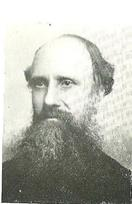
Joseph van Someren Taylor was a very gentle and modest man; yet he has many claims to fame. A pleasant story is told about the genuineness of his Gujarati vocabulary and pronunciation. He once arrived at the gate of the old city and seaport of Gogha in Saurashtra, after dark, to find the gate closed and bolted. He called to the doorkeeper in Gujarati, asking him to open, but there was no response; the doorkeeper did not want to be disturbed by some ill-mannered, late-returning villager. He tried again – and again no result. Finally, he spoke in “Sahebs’ Hindustani” –and the gate flew open! Though it is almost 200 years since he was born, he is still remembered – by people of all faiths – as “the Father of Gujarati grammar”.
How did that come about?
Background and Education
Joseph van Someren Taylor1 was born in 1820, in Bellary, Karnataka, South India, the son of the first London Missionary Society (LMS) missionary in that area, Joseph Taylor. His mother’s maiden name was van Someren. Soon after his birth his parents moved to Belgaum, where he grew up. There he learned to speak the three languages of the surrounding area – Kanarese and Tamil (Dravidian) and Marathi (Sanskritic), to which he later added Gujarati and Hindustani – and probably Bengali. It seems that as a child he was fully bilingual in English and Marathi: and even after living in Gujarat for many years he could always preach fluently in Marathi as well as Gujarati. In those days missionaries rarely went on “furlough” (holiday visit with their family to their home country), and his father therefore sent him to boarding school in Calcutta – at Bishop’s College (now and for many years past a well-known theological college, but then a boys school). Unlikely as it may seem, there is every reason to believe his family’s tradition that he was baptized by the great Baptist pioneer missionary William Carey.
Carey died on 9 June 1834, by which time Taylor was still only thirteen or fourteen. Carey, as a Baptist, would not baptize infants but only those who could make their own profession of faith. He may well have come to know that the young Taylor was a boy of firm principles and understanding, who had refused – as an Independent (Congregationalist) – to sign the Anglican Thirty-nine Articles, when the school attempted to enforce subscription to the Articles on all its students. Taylor was expelled. And there is no reason to doubt the evidence of his son, Dr. George Taylor, that his father had been baptized by Carey.2
So the mantle of William Carey’s wide vision of the nature of Christian Mission may well have descended on the young Taylor - the old pioneer Carey recognizing the spirit and honesty of the young scholar, already fluent in four languages.
The record goes on to say that after his dismissal from the school, still an early teenager and with no financial resources, the enterprising Taylor signed on as cabin-boy on a sailing ship and returned home (to Madras) by sea.
England, Scotland, Gujarat and Ireland
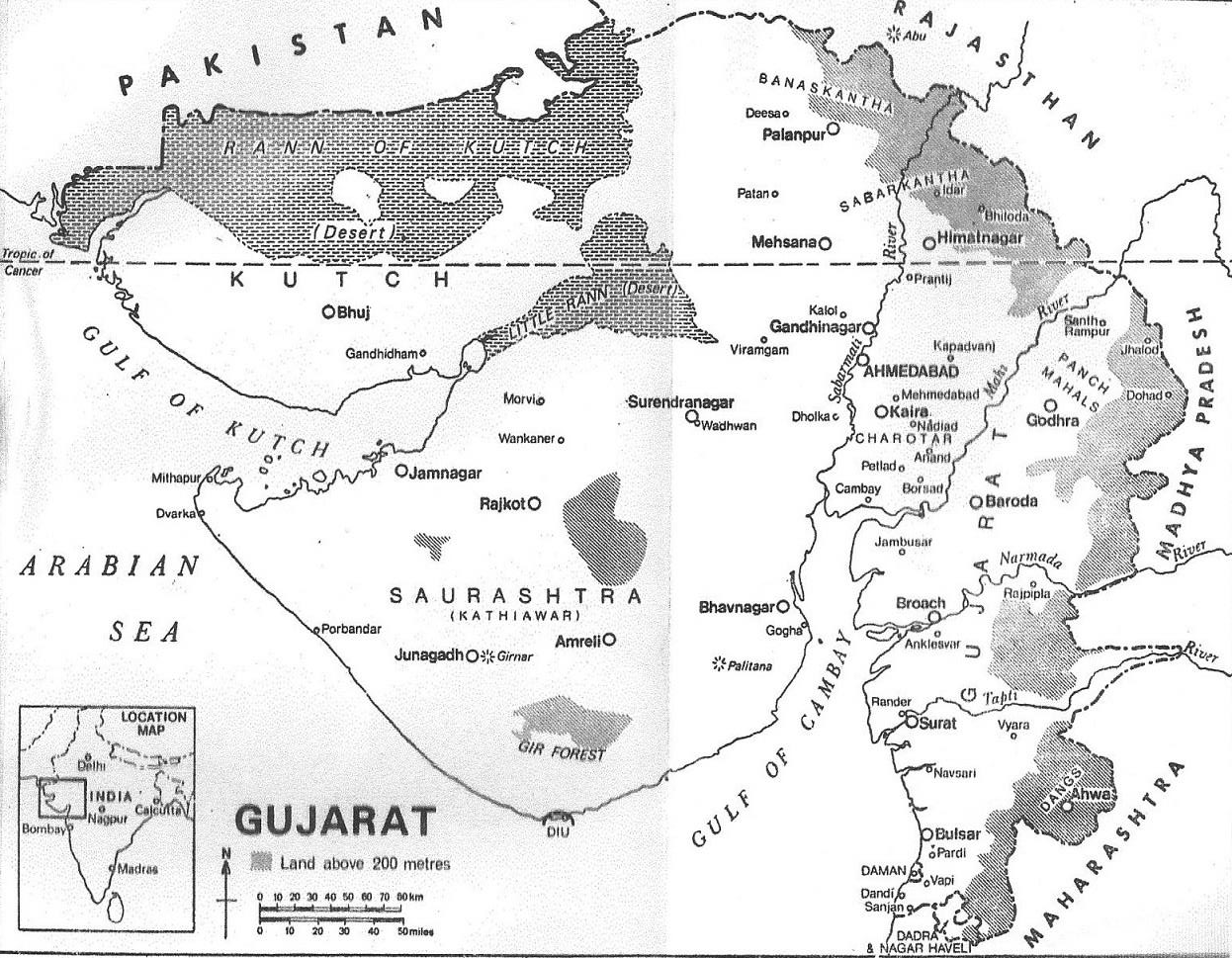
He then entered business as a clerk; but some wealthy European friends, realizing his intellectual gifts, offered to pay for his education in Britain, and so in 1838, at the age of eighteen, he sailed there, and studied first at the London Missionary Society’s training college at Ongar, Essex, and later at Glasgow University. He was met at the quayside by a senior student from Scotland, who introduced himself as David Livingstone. The two became close friends, and shared rooms at Ongar and later in Glasgow. They were serious young men, and they and another friend made a promise – unusual in those days – to refrain from alcohol. (Years later Taylor remarked that one of the three had kept his promise. One wonders which one!) From London, he went to Glasgow University, where he graduated as Bachelor of Arts in 1845, and in the same year, after theological training in one of the Congregational colleges in London, was ordained to the ministry, and returned to India as an LMS missionary, first to Madras, and then, in 1846, to what is now the State of Gujarat. Here he joined the “Mahi Kanta” (“Banks of the River Mahi”) Mission of the LMS, and later served in other cities and towns of Gujarat, notably Surat, Ahmedabad and Borsad.
Predecessors in Gujarat
There was already an interesting link between William Carey - the first Anglophone Protestant missionary (as distinct from East India Company chaplains) in India - and Gujarat. Carey organized the making of a Gujarati translation of the New Testament, but it was inadequate, and not a success. He then, in 1812, sent - to Surat - a young Armenian, Carapeit Aratoon, who had become part of his team of evangelists. In 1815 the London Missionary Society (LMS) sent two of its missionaries to Surat; they were welcomed by Aratoon, who worked with them until his return to North India in 1818. Two of the three LMS missionaries eventually taking his place were from Aberdeen – William and Alexander Fyvie. When Taylor started working in Gujarat in 1848 he was by no means the pioneer missionary there. But his linguistic skills gave him a unique place among his colleagues, both Indian and European.
London Missionary Society to Irish Presbyterian
In 1860 the LMS – which in 1815 had been the first mission to establish an organized presence in what is now Gujarat State – decided to withdraw from Gujarat, handing over its extensive work to the Irish Presbyterian (IP) Mission, which had begun its work in Gujarat in 1841. Taylor, who by this time was a fluent speaker of Gujarati and deeply involved in the work of the Mission, decided that his future lay with the Church in Gujarat, and therefore left the LMS and joined the IP Mission. On his rare overseas furloughs thereafter he lived at 19 Donegall Pass, Belfast, where he made many friends, and became respected and loved. Copies survive of a few of his private letters from Belfast in 1869-70 addressed to colleagues in India - notably James Wallace, Robert Montgomery and T.L. Wells – and are largely about editing and printing grammars both great (Taylor) and small (Wells). The copies, bound in a book, are in the form of “flimsies” on tissue paper used in the “copying books” of the period.
Preacher, Pastor, Scholar, Teacher, Friend of Poets and the Poor
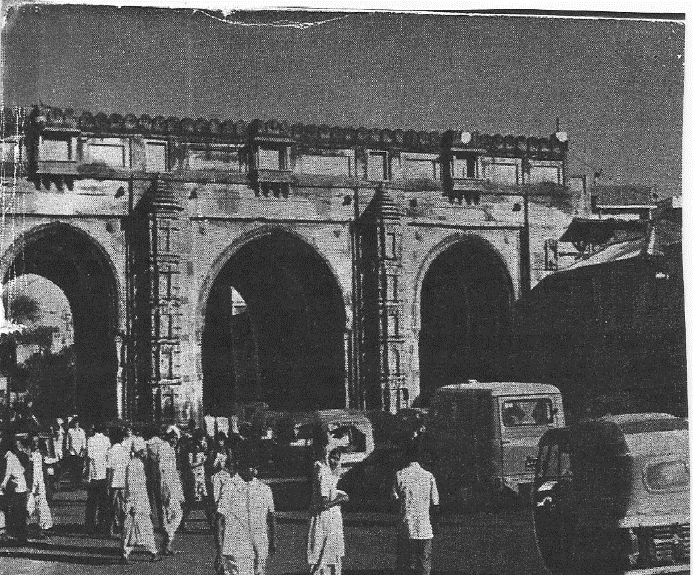
Over the years Taylor lived in several different places. It was he who built the original church (still standing though greatly enlarged) in the large village of Borsad – some of it with his own hands. While still working for the LMS he was one of the first missionaries to develop the “Christian farm colony” – a model of church planting and growth for which the IP Mission later became well known, first in Borsad and later at Ranipur, just outside Ahmedabad.3 He lived in this great walled city, in what is now the IP Mission High School compound in Raikhad, and helped in the early days of the school, which was founded in 1866.
During the wet and stormy monsoon days of 1879, when it was difficult to go out on evangelistic expeditions into the surrounding countryside, he found room in the school to teach an early theological class.4 He also served in the city of Surat (the seaport on the River Tapti often described as “the cradle of the British Empire”) where the East India Company had opened its first trading station (“factory”) in 1608. It was here that many years later (1865) his friend David Livingstone visited him, when he came to India with a shipload of rescued young African slaves, some of whom were placed in the Surat orphanage.5 And it was in Surat that he became a friend of the famous Gujarati poet Kavi Dalpatram. It was through Taylor’s encouragement that the well-known Parsi social reformer Behramji Malabari first began to write the poetry, articles and books which brought him fame. “To him (Taylor) I am indebted for my success as a Gujarati writer. He was my first literary guide and friend. He was the first to approve what had been neglected by many others; and, but for his encouragement I am not sure if I could at all have ventured to publish my works in the face of general discouragement”.6
Taylor became a thorough, and widely recognized linguistic scholar, and not simply of Gujarati. A memorial tribute in the Bombay Gazetteer after his death said that “he was one of the most accomplished linguists in India; his command of the Gujarati language was simply perfect”.
He took a leading part (along with his colleagues who included Robert Young of Edinburgh - of Young’s Concordance fame - who was at the time manager of the Surat IP Mission Press) in the revision of the Gujarati Bible, which resulted in the greatly improved new version of 1861. And in 1867 he published his best known book, Gujarati Vyaakarana, the Gujarati grammar which won for him the unique title of “Father of Gujarati Grammar”. This erudite book demonstrates his familiarity with both Sanskritic and European grammatical methodology, and all subsequent Gujarati grammars are indebted to it. He also wrote or translated many Christian books – a manual of devotion (Praarthnaa Pustaka), a handbook of Christian theology (Tattvatantu), a Church history, the Westminster Shorter Catechism, and John Bunyan’s Holy War (there already was a translation of Pilgrim’s Progress!); and no fewer than three translations of the Westminster Confession of 1647, which - not surprisingly - taxed both his theological, terminological and translational skills – the third and last version of which he completed just before his death.
Indian Christian Theology
Taylor was also an accomplished theologian, especially in his interpretation of Greek and Latin theological terms into Sanskrit - derived Gujarati ones. He was certainly committed to the Reformed tradition Congregational and Presbyterian - in which he had grown up, and which he was anxious to share with Gujarati-speaking people – Christian, Hindu or Parsi for the most part. But he was anxious that this translation of Greek or Latin terms should not lead to misinterpretation. In his translation of the Westminster Shorter Catechism, for example, he was anxious not to give a misleading translation of the word “person” as applied to the Trinity. So he refused to use the common Gujarati word for “person” or “individual” (vyakti) to translate the Latin persona (much less the Greek hypostasis), aware that this would imply that the Trinity consists of three separate people. He bravely dropped the word “person” altogether, saying simply (in Gujarati) “In Godness (‘the Godhead’) there are three”.
But he elsewhere expressed his belief differently, using purely Hindu terms. Sixty years before the great Indian Christian theologian Brahmabandhava Upadhya (a Bengali convert from Hinduism) described the Trinity as Sat, Chit, Aanand, (Being, Intelligence, Bliss), he spoke of “the Lord” (Prabhu - “Lord of all Being”) as Kartaaa (Creator), Traataa (Saviour, Rescuer), and Shodhak (Seeker).
It is a helpful – and powerful - affirmation. The definition of the Spirit as the Seeker who finds the lost is very powerful, as seen for example in Psalm 139:7-9, and deserves further exploration. Taylor uses it movingly in his prayer for the Gujarati language, at the end of his introduction to the great Gujarati Grammar of 1867; and it is quoted on his tombstone:
God (Prabhu) bless Gujarati !
To the end of time may true wisdom, true knowledge, and the good teaching of true religion be heard through her voice! And to God - Creator, Saviour, Seeker - (Kartaa Taarnaar Shodhak) Let praise be given forever!
Hymns
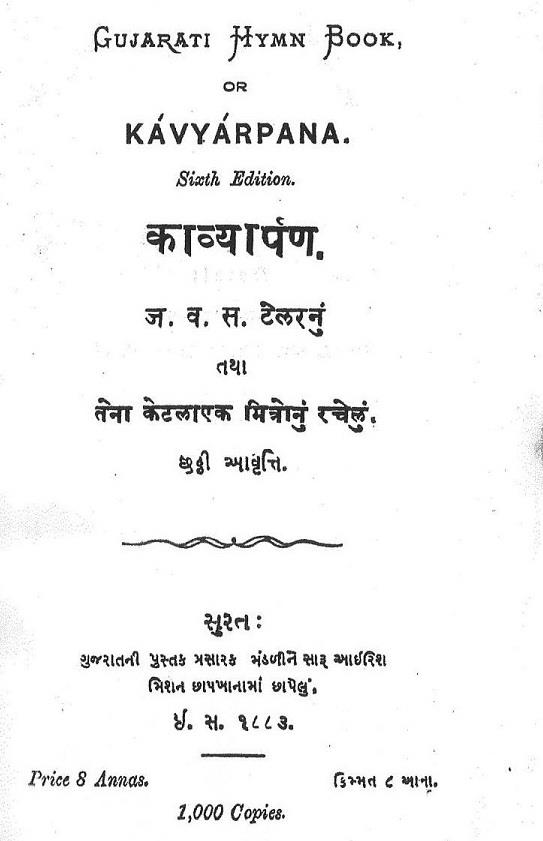
Taylor is known in the Gujarati-speaking Christian Church above all for his Gujarati hymns, and especially for his use of Indian metres, of whose rules he had made a deep study. The hymnbook he produced, Kaavyaarpan (Poetry Offering), was first published in 1863, and many editions followed.
The majority of the hymns in the first edition were in the Gujarati Chanda metres, though there was a small second part containing hymns in English metres. Taylor wrote an interesting introduction to the book, explaining clearly and simply the rules of prosody, to enable the people to sing the hymns correctly, and also, no doubt, to encourage other Christian poets to make their own efforts at composition.
At that time, all over India, Christian hymns were being written in local languages but set to Western tunes. Taylor was one of the very first missionaries to decide that Indian tunes were a fine – indeed a magnificent – medium for the praise of God. Even his scholarly Irish colleague James Glasgow tried to persuade him not to use Indian metres, as he thought they would soon pass into limbo. It was a view widely supported by the followers of T.B. Macaulay in the famous Orientalist versus Anglicist controversy of the mid-19th century.
In an amusing letter to a friend, Taylor mentions Glasgow’s criticism, but writes, “It is time enough to bury a man when he is dead: it is hardly kind to be preparing for his funeral while he is still alive and kicking”. So Taylor persevered – and how right he was!
Most of the hymns in the original Kaavyaarpan are by Taylor himself. Yet to some of them are appended simply the initials “H. Mu”, later shortened to the brief “H”; and the 1873 edition of the hymnbook contained no less than 18 hymns by this author. Who was the mysterious hymn writer who was reluctant to reveal his identity?7
Some light is shed on the mystery by Sinclair Stevenson, a friend and colleague of Taylor’s son George, and himself a hymn writer, architect, and designer of the Islamic-derived pierced stone windows which are a beautiful and well-loved feature of many churches in Gujarat, and of the theological college buildings in Ahmedabad.
He writes, “Some of the poems in the book were the work of a young friend of Taylor’s, one who came near to Christianity, but never crossed the border; a man afterwards high up in the education service”.
We shall probably never know the identity of this poet, eight of whose hymns (though now without any initials attached), were still in the 1961 edition of the widely used Bhajansangraha. Did he remain a secret follower of Christ?
Some of Taylor’s Gujarati hymns are translations from English (and occasionally from other Indian languages) but most are his own original compositions. He loved writing, and could write very easily, on one occasion producing a hymn which took up all the points of a colleague’s sermon! There are morning hymns sung to morning tunes, and evening ones to evening tunes – and woe betide the novice who tries to mismatch them!
The hymns cover a variety of aspects of Christian life and teaching, each with deep theological content, and strong personal appeal. One powerful lyric takes in turn different beautiful things in nature and human life – flowers, daylight, stormy winds, human love – all of which fade away; and each verse finishes with the refrain:
Prem phare nahi Isuno; nahi te karamaashe. Jesus is love, and that love never fades; that love never withers.
Taylor the Person
The accounts all agree that Taylor was a man greatly beloved, with a way of getting alongside people young or old, rich or poor. He had a large family of his own, and wherever he went, children thronged around him and he enjoyed their company. He mixed freely with people of every social level, and with those who were right outside the caste structure. He was happy to enter the homes of the poorest; and after his death some of the village Christians wrote of him, “Yes, the hard dry crust of bread that even a poor man would not have cared to eat, this he took and set himself to work on our behalf. Sometimes he would rest at night on a broken cot and a tattered bed. Yes, dear Mr. Taylor, when he lived amongst us, was as one of ourselves”.9 His generosity too was legendary, and it was said that when he gave money to someone in need, he never counted it first.
He was also a man of great courage. Many of the new Christians were what are now called Dalits - from right outside the bounds of caste. Some of them from the Dhed community, who were weavers and scavengers, were deeply despised and abhorred by caste Hindus, and others from the Koli community, who were professional robbers, and always went around armed. On one occasion a Koli man had made the hard choice to become a follower of Christ, and was staying at the Mission house. A crowd of armed men arrived, and with drawn swords demanded that the man should be handed over to them. Taylor faced them, reasoned with them, and said that only over his dead body could they take the man they wanted. They went away.
With the courage went great gentleness, and – we are told – a strong sense of humour. And also deep emotion; and it was said that often, as he preached – which he did most eloquently, in a variety of languages – people would often see tears streaming down his cheeks. And people responded to him.
When news of his death in far away Scotland reached the assembled congregation in Borsad, in the church which he had built, a long wail of sorrow swept through the building.10
The Taylor Family in India
Taylor was a member of a large and distinguished missionary family connection, many of whose members went as missionaries to different parts of the world. His first wife – Eliza Sarah Pritchard, whom he married in Bombay in 1847 – died in 1858, leaving him with three sons. He married again in 1859, in Dollar, Clackmannanshire. His second wife, who outlived him, was Georgina Buchanan Brodie. In all, five of his sons became missionaries in different parts of the world. At least three of his children served in India. His son Dr. George Pritchard Taylor (1854-1920), wrote what became for many years the standard Gujarati grammar for non-Gujarati-speakers (The Student’s Gujarati Grammar amazingly still in use). He was the founding principal of the Stevenson Theological College in Ahmedabad, later (1942) to become the Gujarat United School of Theology.11
George Taylor was the generous benefactor who made it possible for the well-known Irish medieval scholar, poet and novelist Helen Waddell12 to go to Oxford and develop her distinguished literary career.13 A younger son, Dr. H.F. Lechmere Taylor (1872-1954), gave outstanding service as an eye surgeon in the Punjab, and later as director of the Edinburgh Medical Missionary Society. A daughter, Elizabeth Mary Taylor (1861-1942), wife of Prof. W.G.T. Mulligan of Agra College, India, is buried in the family grave in Newington Cemetery, Edinburgh.
“Father of Gujarati Grammar”
Taylor was a very modest man, who would never have dreamt of describing himself as the “Father of Gujarati Grammar”. For of course the Father of Gujarati grammar is Sanskrit grammar, as Taylor rightly declared when he spoke of Gujarati as “descended from the Aryan family, daughter of Sanskrit”. Two distinguished 20th century Gujarati scholars – Shri Nanubhai Dave and Shri Ramabhai Pandya, in an appreciative Gujarati article in the Sunday edition of the newspaper Gujarat Samacharr (17.05.2009), suggested that it would be more accurate to describe Taylor as the constructor or systematiser (rachityaa) of Gujarati Grammar. Nevertheless, the title “Father of Gujarati Grammar” has persisted, and no one could be worthier of it than J.V.S. Taylor.
“All My Life Long”
In 1881 Taylor was on furlough, staying with his wife and children at 2 Queensferry Terrace in Edinburgh (the original house is no longer there). On 2 June, as he was preparing to go across the Irish Sea for the General Assembly of the Presbyterian Church in Ireland – unusually meeting in Dublin that year rather than Belfast – he had a sudden heart attack. He was in great pain, but repeated more than once the opening words of a hymn by the Moravian pioneer Zinzendorf – a hymn which he had translated into Gujarati –
Jesus, thy blood and righteousness My beauty are, my glorious dress.
Then he said, “I have trusted God from my boyhood, and He has been with me and led me all my life long”. He did not speak again, and died within an hour.14 He is buried in the Newington Cemetery in Edinburgh.15
End Notes
This booklet is an expanded version of Chapter 27 of the author’s book Beyond Captivity: Explorations in Indian Christian History and Theology, Centre for Contemporary Christianity, Bangalore, India, 2014.
Produced with the help of Friends of Newington Cemetery http://www.newington-cemetery.org.uk © Robin Boyd November 2017
For an account of Taylor’s life and work, especially his Gujarati hymns (with commentary and basic English translation of the text) see Sanjay Malaviya, The Theological Contribution of Rev. J.V.S. Taylor through his Gujarati Songs, unpublished BD thesis, Union Biblical Seminary, Pune, 2007. Older sources: W Fleming Stevenson, memorial article on Taylor in the Irish Presbyterian Missionary Herald, Sept 1881; Robert Jeffrey, The India Mission of the Irish Presbyterian Church, Nisbet, London, 1890, pp 258-262; RH Boyd, The Prevailing Word, Church House, Belfast, 1953, passim; Robin Boyd, A Church History of Gujurat, CLS, Madras, 1981, passim; Robin Boyd, Beyond Captivity: Explorations in Indian Christian History and Theology, CFCC, Bangalore, 2014, Chap. 27.↩︎
Quoted in Margaret Stevenson, Do you remember Sinclair Stevenson? Blackwell, 1931, p.185.↩︎
Years later he was followed in this area of work by Robert Henderson, whose daughter Helen became the wife of Bishop Lesslie Newbigin of the CSI. The farm colony model was not without its critics (including Bishop Stephen Neill), who held that it took Christians away from their social and cultural environment, where their witness might have been more effective. Yet it was largely from these “colony” villages that the later leadership of the Church in Gujarat emerged.↩︎
RH Boyd, Prevailing Word, p. 128_._↩︎
When my late wife Frances (Paton) and I arrived in India in 1954 our first night in Surat was spent in “the Livingstone Room” in the old Mission Press building, which had a large framed engraving of Livingstone hanging on the wall.↩︎
Behramji B Malabari, Gujarat and the Gujaratis, Bombay, 1884, p. 31.↩︎
See my article, “The Mystery of the unknown Hymn-writer” published in the monthly Khristibandhu (Gujarati) magazine in 1963.↩︎
Described as “composed by J.V.S. Taylor and some of his Friends”, Printed for the Gujarat Book Society by the Irish Mission Press, Surat. The first edition had been published in 1863. The title page is printed in Devanagri (Sanskrit) script.↩︎
Missionary Herald, Sept. 1881, p. 639.↩︎
Ibid., p. 638_._↩︎
On GP Taylor’s death in 1920 he was succeeded as Principal by my father, RH Boyd (1880-1957).↩︎
Author of The Wandering Scholars, 1927_, Peter Abelard,_ 1933_, Medieval Latin Lyrics,_ 1940.↩︎
See Felicitas Corrigan, Helen Waddell: a Biography, Gollancz, 1986, pp. 25-39, 102-191.↩︎
W Fleming Stevenson, memorial article on Taylor in the Irish Presbyterian Missionary Herald, Sept. 1881.↩︎
When I commenced this study I knew only that Taylor was buried in Edinburgh. Thanks to my friend Angus Mitchell, and through him to the very helpful staff of the Mortonhall Crematorium, we found the grave, in a very poor state of preservation. Through the efforts of the voluntary “Newington Cemetery Interest Group” the grave has been restored (November 2017).↩︎