God’s Redemptive Acts & Creative Dealings Through One Who Found Life
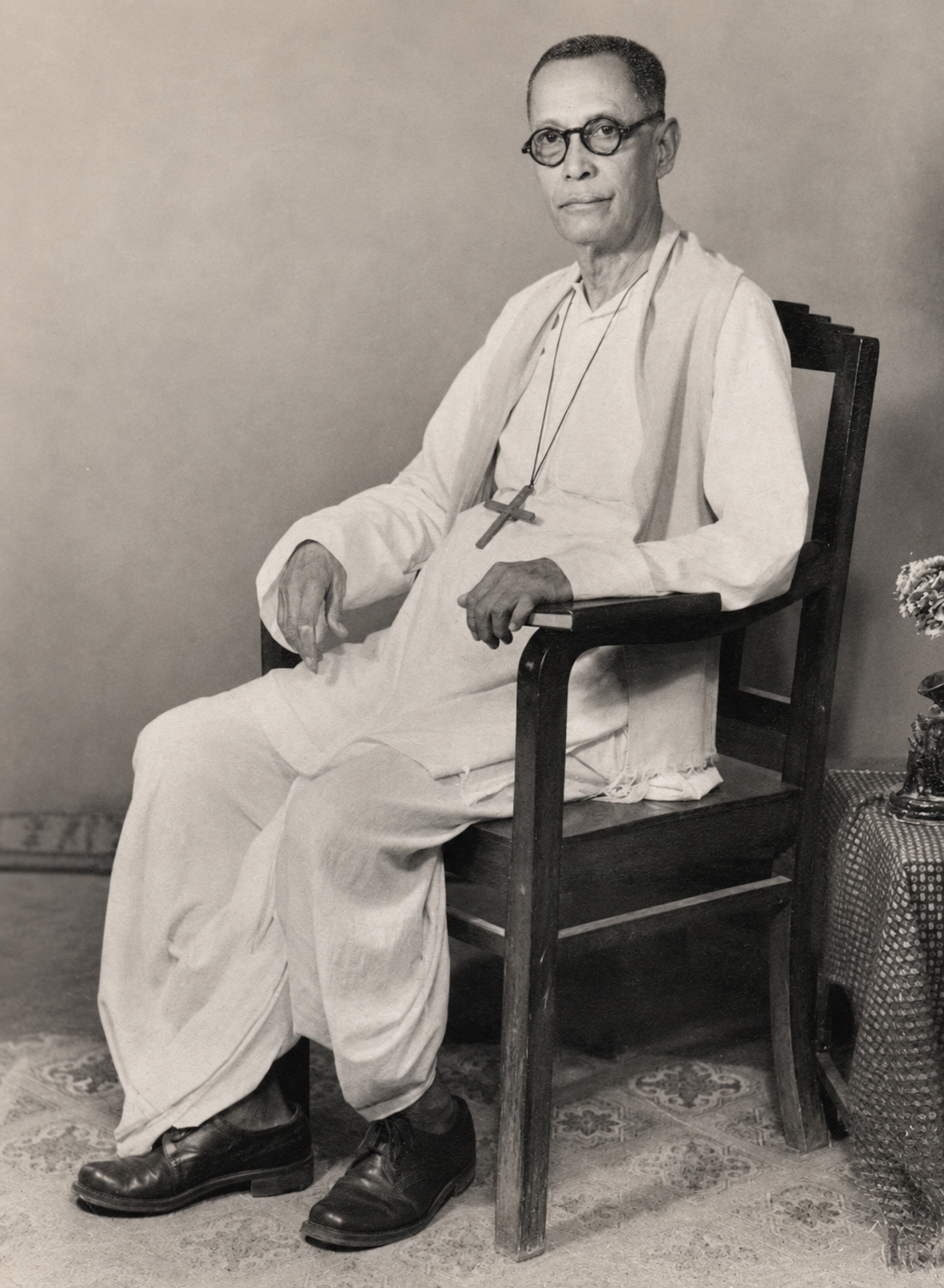
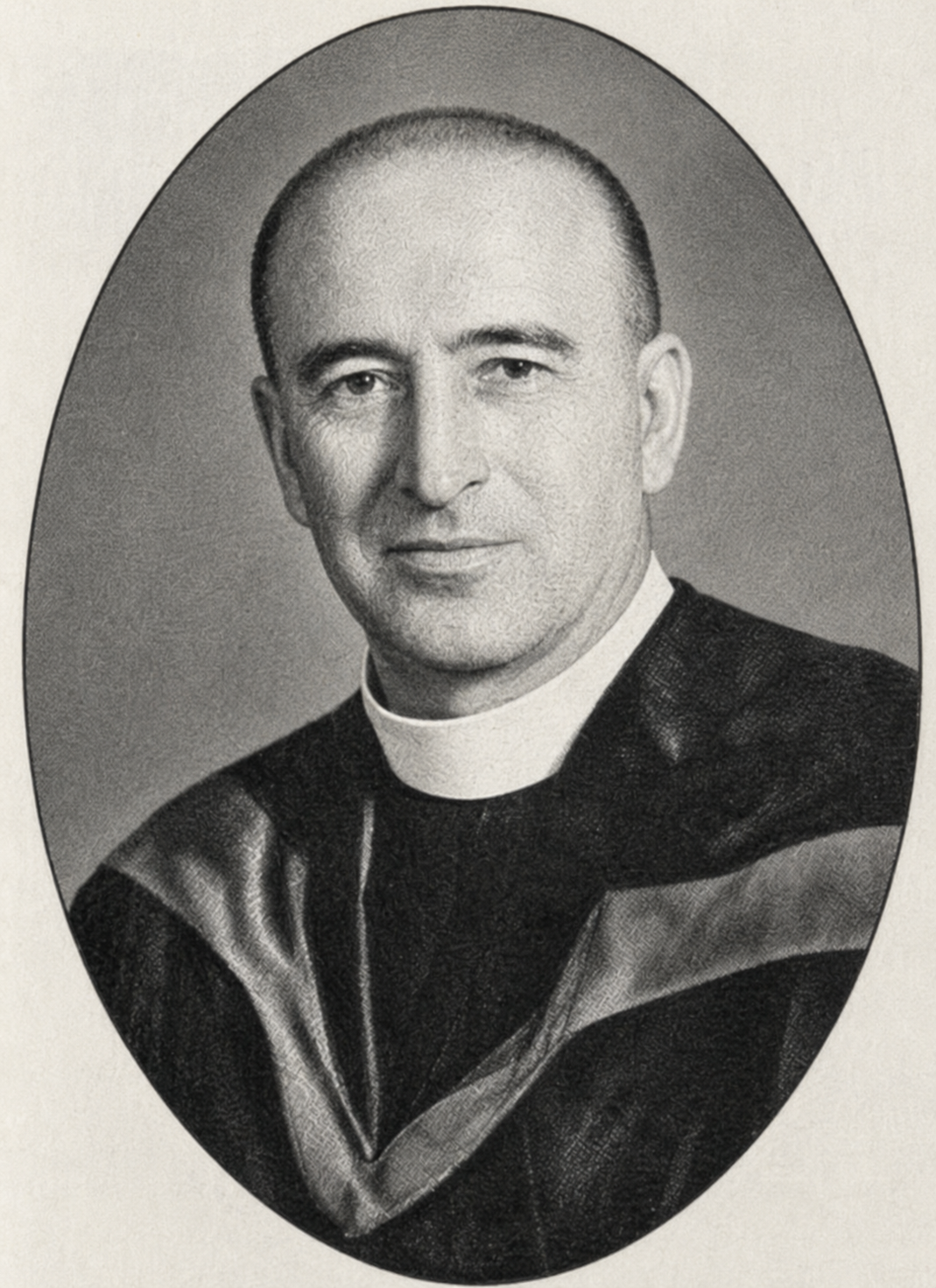
Rev. R.C. Das, B.A. Hons., M.A. (Sanskrit & Philosophy) Shastri (Nadia Pandit Mandal); Vidyaranjan (Bharat Dharm Mahamandal, Varanasi).
Formerly - C.M.S. Missionary and Professor of English and Philosophy at St. Paul’s College, Calcutta and St. John’s College, Agra (1913-23); C.M.S. Missionary at Kushtia, Mid-Bengal (1923-24); Missionary Church of God (U.S.A.) - at Kurigram and Lalmanirhat, North Bengal (1924-30); Missionary - Benares United City Mission (1930-47) - Retired.
Sevak-Pramukh and Acharya-Khristpanthi Ashram, Varanasi (1948 to date); Hon. Missionary - N.M.S. since 1948; Editor-Publisher - Seeker & Pilgrim - (bimonthly) Palak Pramukh & Executive Secretary - Bharat Khrist Sangh.
Dedicated to the Revered and Affectionate Memory of My Father
Shri Dukhinath Das
(who reared his motherless child with rare devotion and faith in God)
and
The Rev. John D. Morris
(who taught me the A.B.C.’s of Christ)
Section 1
One’s and Two’s
Rain starts in one’s and two’s in soft humble dribblets and slowly, but soon there is a shower flooding the country. Seeds germinate silently in one’s and two’s and slowly, but soon enough, there is a rich crop in the field. Admission to a school is in one’s and two’s and slowly the institution overflows. Entrance into the kingdom of God is similarly by one’s and two’s and steadily and surely it grows into a large enough Fellowship giving succour and peace to others.
When evangelism is quiet and personal through study of the Word, meditation, praise and prayer, and by the method of sweet reasonableness and persuasion and by appeal to conscience, heart and will, there is less risk of the wheat getting mixed up with tares. Mere appeal to intellect may bring about conversion, but it will produce dry barren Christianity. Strong open air appeal to emotions in large crowds, hell fire preaching through fear, exploiting men’s poverty and credulity, or suggestion of indirect inducements to worldly success - these and other methods might bring many, as they have done in the past, but they create problems far outweighing the gains and marring their importance and value.
When the Lord Jesus saved me - a sinner and I was baptised in 1908 (vide “My Spiritual Pilgrimage” written in 1911 and published in the N.C.C. Review of March 1949). I felt an inner urge to preach the truth of Christ among my own people. Within hours of my public confession in the Church I was led to go out and witness to a crowd of fairly educated people in a park on the river bank. Such spontaneous voluntary and independent preaching went on for some years. In spite of heavy work as an advanced student and soon as a teacher, I used to address large numbers in halls in the open air, in cities and in villages - sometimes audiences as large as five thousand. It was all direct and frank - preaching the Word - and appeal to heart and head to accept the claims of Christ upon one’s life. I soon realised the futility of it all - its impersonal vagueness, its vanity, its costliness in mental and physical energy, above all its temptation to name and fame. I preached in the village of Dacca, Barisal, Faridpur, Jessore, Khulna, Nadia, 24 Parganas, and Pabna districts of the then undivided Bengal and always in co-operation with missionaries and Indian evangelists. I preached with my Gospel Team in the halls and squares of Dacca and Calcutta; and was the leader in arranging huge evangelistic campaigns for John R. Mott, Sherwood Eddy and others and was the first and last Editor of “Prochar Abhijan” - a monthly - promoting evangelistic campaigns in Calcutta and in the presidency of Bengal. I also associated myself, and more happily, with the evangelistic activities of the Church of God under the able and unique leadership of Bhakt Allauddin Khan - the first instance of independent voluntary and indigenous evangelism I came in contact with a spiritual movement that stirred Assam, Bengal and Orissa in the beginning of the century.
But soon I was led to a new spirit, a nobler motive, a congenial and quiet evangelistic approach. What follows will be a verification of the personal, friendly, and indigenous method in evangelism as spiritually and otherwise valid and effective.
God has abundantly blessed my humble and quiet ministry mainly among Hindus - for which I cannot be too thankful. There have been too many critics of my ways of life and work - more among Indian Christians than among missionaries. But ever since my conversion I have had the conviction that the Holy Spirit of God was with me and guiding me. Very few have liked or understood the emphasis on indigenous life and approach. Once upon a time at the Community Centre in Landour (Mussoorie Hills) when I was explaining this natural Christian approach in India to 300 missionaries assembled there. I was stunned by a question from a well known missionary (who ought to have known better) - what is the net result of Mr. Das’ new method in the shape of conversion? I felt the question was put more to embarrass me than for enlightenment in the midst of a very attentive and respectful audience. But the Holy Spirit did put the proper answer on the lips of one who had never before that time spoken about the fruit of his ministry in a public manner. Indian Christians, and many of them, who have visited me in the Benares United City Mission and in the Ashram for the last one third of a century for study, experience, or work or as casual observers, have often asked me - Mr. Das, how can you, as a Christian, live in this atmosphere in a city enveloped in the thick darkness of heathenism? Some of them have even quoted scriptures in support of their position. But the same spirit supplied the answers. I fear that the current theology of evangelism in the Church is rather crude and not scriptural. Had they known St. Paul at all properly they would not have given vent to such scepticism partly coloured, I am afraid, by prejudice and jealousy.
What follows is very brief reference to a few among many converts who found their new life in Christ in association with this very unworthy servant of his. I have always regarded propaganda and publicity as not quite right and Christian. I kept very few details or pictures of those who came on my way. Then also to avoid length and to reduce cost of this booklet it must be very sketchy. But it will give you an idea how different and distinctive these cases have been, though they all belonged spiritually to one centre - Jesus Christ. In my labour of love for the Lord and the Kingdom, it has been my thoughtful endeavour to bring men not so much and deliberately to the church as to God in Christ. For I believe that when a man finds his Saviour and God in Jesus the Church fellowship is natural and automatic, nay, inevitable, as it happened in my case. Though, to be sure, there are difficulties and problems connected with it and often the fellowship may be superficial and restricted. It is the serious responsibility of the Church to take the initiative in offering the fellowship - guidance and nurture - to the young converts who quite naturally feel diffident; otherwise the converts will be confounded and frustrated. I have also been careful not to preach doctrine or theology as such, because these do not have the power to bring men to the Cross, though I know that Christianity is the most convincing and self-consistent piece of theology and provides the best philosophy of life to any serious seeker of God and truth. Nor have I entangled myself or enquirers in philosophical discussions, though I have been a student of philosophy and know what a useful training it is to the mind. I have never drawn the attention of Hindu enquirers to the so-called Christian civilisation or western culture, though I admire and acknowledge many beautiful and healthy elements of Christian truth in them. I have on the contrary, talked of the discriminate place of Indian culture in the personal life of the convert and in the Indian church.
I have generally ignored but sometimes condemned the harmful role of the church as a religious Institution in the political life of a country, though I have supported participation in political life by Christians as citizens of the country. This should be done by convinced and practicing Christians imbued with Christian principles of justice and, integrity in order to help build up a truly democratic and socialistic state. It has been natural for me to do it (and it should be natural for all nationalistic converts) as I have been from my youth up in the midst of the struggle for freedom under the banner of the Indian National Congress. The appeal of Christ in the context of broad nationalism, political and cultural, has been found very helpful. Because the impression that has gone round in the country is that the convert to Christianity as to Islam - both foreign religions - is a minus, a loss, a reduction in the loyalty to the country.
I have also tried to make it perfectly clear to all enquirers that without a heart realisation of the truth of Christ and without a sense of assurance of the New Birth and Forgiveness, Peace and Power of the Holy Spirit on the basis of the atonement through the shed blood of Jesus and the Resurrection and the Pentecost, mere formal baptism upon intellectual conversion or social attraction of the church and to become a “Christian” as distinct from a believer and disciple and a child of God-is not only of no use but positively wrong, reprehensible, and injurious to all concerned. On the contrary Baptism in the sense of an open confession of Jesus Christ as personal Saviour, Lord and God and in the sense of being grafted into the Body of Christ-the true Church and Fellowship, though it may create temporary misunderstanding and resentment and may lead even to persecution, is the healthy and sound thing to do. It brings about beneficial results for all concerned in the long run.
Such a spirit and approach silently do their work of revolutionising the whole life of man under the grace of the Lord and direction of the Holy Spirit.
Section 2
Souls That Have Been Saved
A. In Dacca: 1908-1910 as a Student
Naba Kumar Sarkar - A young College student of my community (three million in Bengal). Poisoned to death by his mother after conversion in the Baptist Church.
Nibaran Ganguli - A Brahmin who had joined the Brahmo Samaj before he became a Christian. Joined some service. Contact was lost.
B. In Calcutta and Serampore: 1910-1918
(As a student of Theology, Sanskrit and Philosophy and as a Professor at Paul’s).
- Bishweshwar Choudhury - A member of my community, lover of the Gita, respected leader, baptised in his village home by Dr. C.S. Mead of the Australian Baptist Mission. Forsaken by wife who later joined her husband and was baptised.
- Dayamay Choudhury - His eldest son lived with me in St. Paul’s College until Baptism in Holy Trinity found work in the Docks of Calcutta.
- Abdul Wadud Munshi - An impulsive Muslim youth who found his centre in Christ. Had lived with me in College until Baptism by Dr. C.S. Mead. Later on he became a Pentecostal Preacher.
- Tarakeshwar Mukerjee - Son of a Brahmin widow; stayed with me in College; taught and trained by (then) Mr. P.A.N. Sen, Assistant Secretary - Y.M.C.A. After Baptism in the Anglican church he later became an Evangelist under the C.M.S. He was a sincere and spiritual believer.
- At his ardent desire and with mother’s consent obtained, I actually rescued his two little brothers - tiny tots - from a Hindu Ashram to whom the poor mother had given them away. These received liberal education and have been holding high positions in the Anglican church - Rev. Canon R. Mukerjee M.A.B.D. and Mr. B. Mukerjee B.A.B.T.
- Johiruddin Khan - A sharp dynamic Muslim youth who was very much attached to me and maintained close fellowship confessed Christ publicly. He was taught English and Philosophy by me in Calcutta and Agra. He became a Professor of English in St. Andrew’s College Gorakhpur. He died rather prematurely. He was a College friend of John Abdus Subhan - now Bishop in the Methodist Church - whom also I had the privilege of teaching at St. John’s.
- Pramila Bala Das - My half sister, younger of the two. She had a resentful taunting attitude towards me because I had become a Christian. But she became attached to my wife, was attracted to our family prayers and came away from father’s home at the age of 19. After due instruction she was baptised in the English Baptist Church in Barisal where she taught for many years in the Baptist Girls School. Recently for a number of years she has been looking after a Nurses’ Hostel (Lady Roger’s) in Calcutta.
Here in Calcutta during a formative period of seven years full of dynamic ideas and constructive projects - experiments were made, with sympathetic approval and co-operation especially of the Missionary staff in the College and School, on Indigenous methods of worship and ways of preaching greatly appreciated by non Christians (especially Hindus) but looked upon with suspicion and jealousy by the officialdom of Missions and churches. An advanced enquirer - a postgraduate student living in my Hostel - stopped short of Baptism because of an ugly incident in a church caused by ignorance of Indian Sentiment and over-emphasis on ecclesiastical etiquette.
C. Agra, St. John’s College, 1918-22
Social conditions here were difficult and the Christian atmosphere in the College was not helpful. Though a number of students and some educated people in the city were influenced there was no outward manifestation in conversion.
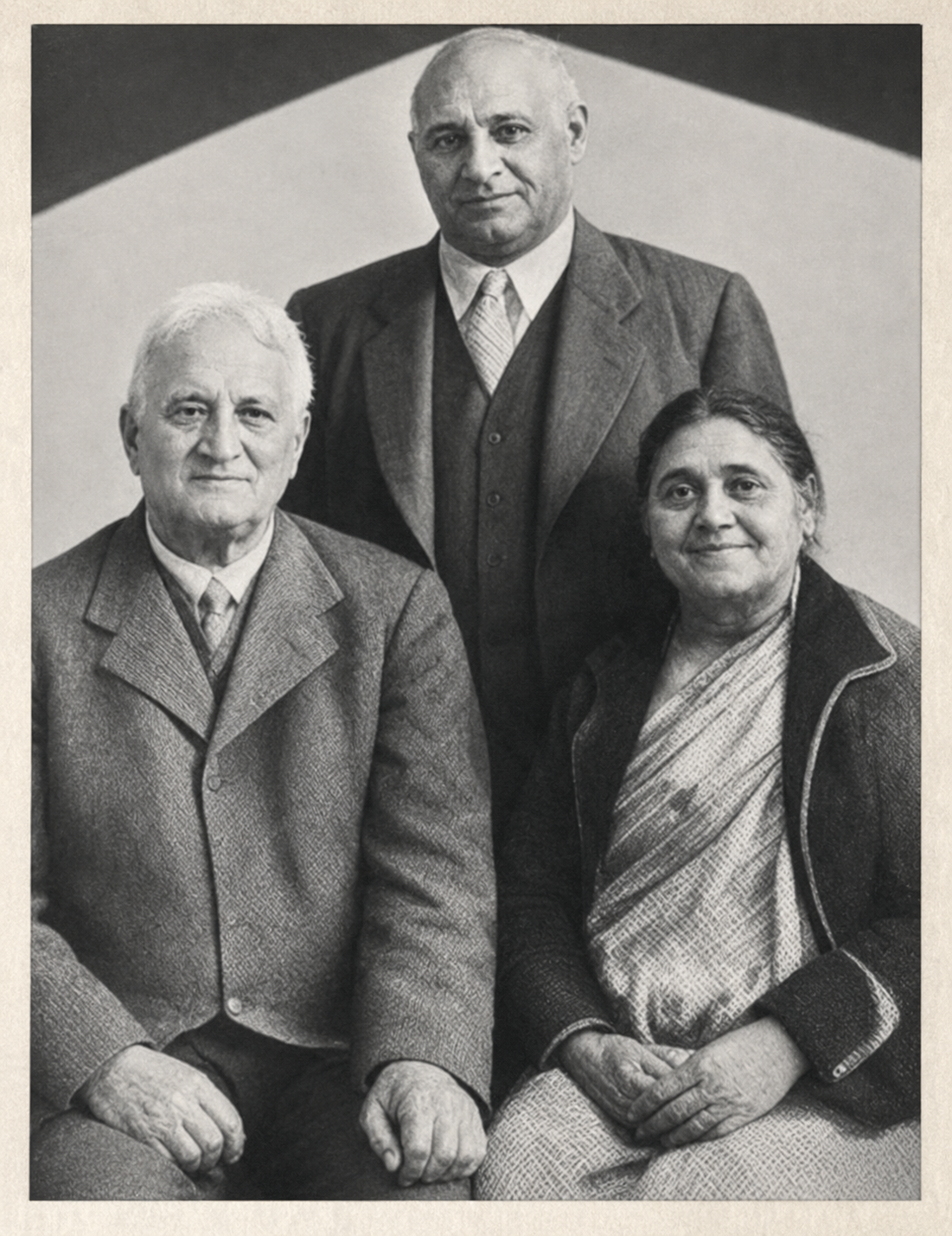
But during my time in Agra in 1919 my elderly father Shri D.N. Das then aged about 60 was convicted and baptised in his remote village in Dacca more than a thousand miles away from me. He was miraculously and instantaneously healed, through personal faith in Jesus-the Good Physician, of a painful chronic disease of the stomach. After my baptism in 1908 he became extremely sad as he loved me dearly, lost his general health due both to sorrow and various religious exercises he undertook with greater zeal to find peace and truth. He visited many religious centres and saints. But nothing availed. He was studying the Bible too. The Lord directly touched him on the spot where he badly needed urgent relief, then he felt he was a sinner and surrendered. The same missionary who baptised me - the Rev. Peter Noble of the Baptist Mission - came to the village with a few other Christians and my father was immersed in the river in front of our home. My stepmother was looking out from the homestead and as my father came out of the water she left the home holding her son with one hand never to return. Suffering began for my father who had to manage everything himself (even cooking his meals) the lands and gardens and a little business in the market. But he stood everything with fortitude and his last years were happy. He lived for about nine years as a Christian and passed away peacefully. His life of faith in the village was a powerful testimony to the reality of the living Saviour.
D. Kustia, Nadia District, Mid. Bengal 1922-24
In this C.M.S. evangelistic station I was the first Indian missionary to serve. Years ago during the days of political agitation the last English Missionary was shot by Terrorists in 1908 and such a fruitful field was lying fallow. Response to indigenous methods of approach was spontaneous and quick. A community of converts grew. A church was at once built for evangelism and worship.
Saeed Md. Hussain - A tenacious enquirer and a persevering student of the Bible became, after baptism, a quiet personal worker on a voluntary basis and led many to truth. His children are working in different capacities.
A young girl of 18 one Miss Das - (Whose full name is out of my mind) had been seduced by a young Doctor. She was a niece to the great political leader C.R. Das. Disgusted with her lover for his unsteadiness and pretence and remembering the comfortable words of Jesus preached in her home in Dacca when she was much younger, she left the man one day and made for the nearest Christian centre-travelling alone a distance of nearly a hundred miles by train and boat. She had an illegitimate child on her shoulder. But she found a loving home. With due repentance she was baptised and later trained as a nurse.
Khuki - (A 19-year-old beautiful daughter of a prostitute) had her throat cut by her Muslim lover out of jealousy. But as the cut was partial her life was saved in the local Hospital. She did not want to return to her former hell. She came to us at the suggestion of the Doctor in charge. Through prayer and instruction she was thoroughly changed. We named her Pankojini (lotus) as she was reborn out of the mud. During her baptism in the tank of the compound there was great interest and excitement. Soon afterwards we rescued her little daughter from the clutches of other prostitutes, as Khuki’s mother was finished by the same Muslim at the same time, the child having escaped in the pell-mell. She gladly offered her own money for court expenses. Ever since then she has been an evangelist in the district of Nadia.
A fairly well-to-do family of my own community in a village not far away.
Mr. Biswas - (whose full name I forget) M.A.B.L. President of the local Bar Association, well versed in the Bible, came to believe. Though much older than myself he used to regard me as his spiritual father. He would not be baptised as he was deeply offended by a painful event in Church Mission circles over which I severed my connection with the Church Missionary Society. The Rev. R.F. Pearce M.A. - a scholar but unimaginative Imperialistic Briton - Chairman of the District Church Council thoughtlessly interfered with my method of work. Realising that the freedom in my ministry was affected I gladly resigned. The field has been uncared-for due to want of proper leadership.
Nayantara Mondol - My half sister-elder of the two-came as a widow with two children. She was trained as a midwife-nurse. Her elder daughter - Namita a teacher - married recently. The younger (Sangita) an officer in the Calcutta Telephone Exchange.
Some others came to the church through baptism, but need of brevity forbids their mention.
E. Kurigram and Lalmanirhat in Rungpur District N. Bengal 1924-1930
In the Church of God Mission - an American body of believers - biblical and apostolic in doctrine and practice with emphasis on Divine Healing and Pentecost. The leader - the Rev. Allauddin Khan - who organised this mission in India purchased a large property in Kurigram town. He himself wanted to settle down here, but before he could develop the work he suddenly died at the age of 42. I was called to this task. When I left for Varanasi in 1930, there were 25 Schools in the district and a church organised entirely out of Hindu and Muslim converts.
Romesh Chandra Sen - A high caste Hindu youth of 24, well-educated and related to a high official of the Zamindar (Landlord). Frustrated in life he determined to end it by throwing himself down into a well. But an inner voice stopped him. He was soon met by us. Inspired and encouraged by the words and life example of Jesus Christ he confessed him as his Saviour in a double sense-from the death of his body and of his soul. He was baptised in the river flowing nearby. His uncle, the influential official, conspired and organised an opposition and even threatened the Magistrate if he intervened. But we marched to the river in a procession singing victory to Jesus whose unseen power scattered the opposition. Romesh who found peace and hope through Jesus later on became a Police Officer.
Md. Abdul Razzaque - the young healthy and cheerful son of a Muslim Moulvie. The father, to our great joy and encouragement, gave consent to his baptism. Abdul became a Doctor and has visited us in Varanasi.
Samir Mia and family agricultural people, simple believers with earnest devotion and loyalty.
Nepali family headman a cook-glad and faithful people.
Some others I do not mention. Here also a new church was erected for evangelistic preaching and worship.
Among the brethren of this church and Mission my membership of the Anglican Church was not in question, and I was accepted, as I was, as one of them. They saw from a level far above the denominational one and saw beyond the sectarian line. I deeply enjoyed their brotherly confidence and fellowship. Their living faith in Divine Healing deepened my spiritual experience. Above all as an Evangelist I felt completely uninhibited in my ministry and had full freedom in following my ideas and ways of work.
But I had to leave Kurigram where I wanted to settle down, and it was a wrench in my soul as it was an ache in the heart of my friends. But it had to be. By many suggestions and signs the Holy Spirit made it plain to me that the invitation from Benares United City Mission was a call from God to preach the Gospel among the believing religious Hindus - Pilgrims, Sadhus, Sanyasis, Saints and Sages, Pujaris and Pandas, in the Ashrams, temples, schools, colleges, Hostels and generally among educated people. Varanasi has been the happiest sphere in my ministry, so I arrived here one day in July 1930 with my wife and six small children. We were warmly received by the Rev. & Mrs. J.C. Jackson who had joined the Mission just a year ago when it was founded.
F. Varanasi-1930-1963
(In the Mission-1930-1947: In the Khristpanthi Ashram-1947-63)
The B.U.C.M. or Kashi Khristiya Sangha was a wonderful bit of evangelistic effort confined to the city area. It was the first and last piece of Union Evangelism through Seven British Societies coming together like the M.M.S., L.M.S., C.M.S. etc. I was given large latitude to organise the work in the city and its suburbs. According to the Constitution the ideal aimed at was the partnership of a Missionary and an Indian leader. So I had a missionary colleague. It was by no means easy to work harmoniously, but God gave the necessary graces. Our relations were very happy in the actual work of the mission. In difficult situations later on after Jackson had gone and others came the All India Committee respected my views. It is here in Varanasi, both in the Mission and in the Ashram (originally an adjunct of the Mission), that my ideas and methods had full sway. We have been respected by the high and the low in society and there has been all round cordiality and response barring a few small incidents of pinpricks and disfavour in the beginning.
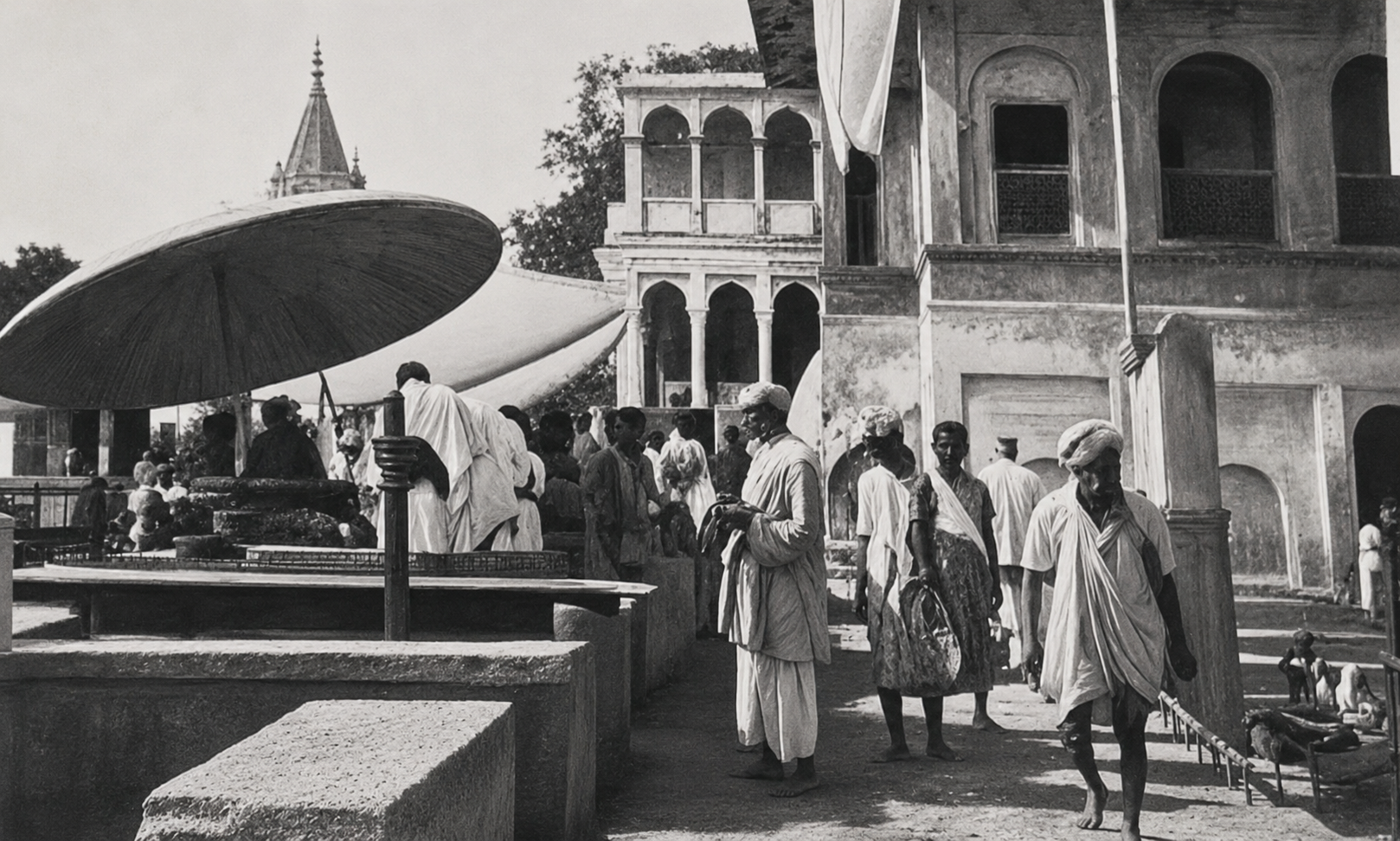
Varanasi is the main all India centre of Hindu Sanatanism and modern religion - its thought, piety and practices. One of the largest, if not the largest and important pilgrim centres and cultural seats - Varanasi occupies in North India a strategic position in the life of the Hindu people. With a population of over six lakhs and situated on the left bank of Ganga and on the high road to all parts of India, Varanasi receives a constant stream of pilgrims, saints, seekers from all parts of India and many foreign visitors. With the Mahatmas living in the Muths and Ashrams, with Sanskrit learning extensively cultivated, with the Kashi Hindu Vishwa Vidyalay and the Sanskrit University, with its beautiful bow like river bend studded with temples and a hundred bathing ghats of stone steps, and with the numerous sects and schools of Hinduism-ancient and modern-Varanasi is verily the nerve centre of Hindu India symbolising both its head and heart through the many educational, cultural and religious institutions. Its secular, social and political life is of a higher order too. Varanasi has supplied to the State three Governors and several ministers and is proud of her high grade indigenous home industries. Christianity also can claim a reputable tradition in as much as it has built half a dozen churches in a century or so (one of them-St. Mary’s being the first to be built in N. India) and has spread modern education. The Maharaja Jainarain Ghoshal Pathshala having been the first in N. India founded in 1814. The pioneering missionaries who spoke Hindi and Sanskrit baptised eminent converts such as Pandit Nilakanth Goreh Shastri-eldest son of the then Mohant of Shri Vishvanath Temple. These frank, saintly, and friendly missionaries established preaching centres inside the Hindu city in lanes near temples.
In such a city of the Hindus, in the very hub of its life and activity mainly of religious significance has stood prominently the Christian Ashram with its message of true peace, unity and love and as a living witness to the redemptive power of Jesus Christ.
Through its humble service during these 30 years, many have been converted in their minds and hearts to the truths of Christianity, many more have been deeply influenced in the right way. Out of these many, some have publicly confessed Jesus as Saviour and Lord - Sadhus and Sanyasis, pilgrims, students, families, congressmen including two widows - all educated and originally religious. Some of these have turned out very effective evangelists and personal workers. The budget of the Ashram, has always been very moderate as the leaders and inmates are volunteers living on a sacrificial basis. Such an indigenous original and independent enterprise certainly deserves the sympathy, prayer and active support of all those who desire the extension of the Kingdom of God in India.
Khristpanthi Ashram
(A spiritual and evangelistic centre for the followers of the Way of Christ started in 1930 reorganised in 1948)
A. Position: A Co-Operative Non-Partisan Fellowship
Of those who confess Jesus Christ as personal Saviour and God.
B. Aims and Objects
- Study of the Bible of Hinduism and of the Apostolic Church
- Purposeful creative thinking
- Adventures in Faith under the Holy Spirit
- Indigenous expression of Christianity
- Evangelism.
C. Means and Methods
- Worship
- Community life
- Literature
- Personal friendship
D. Activities
- Preaching the Gospel specially among orthodox groups
- Bible classes, conversations with enquirers, distribution of literature, prayers and Lectures, Lending of books etc.
- Retreats and conferences for workers.
I was led in the first year of my association with the Mission to organise the Benares Fellowship consisting of men and women of middle class society and of graduate standard from all communities. This gave me fruitful contacts with and access to many religious and cultured Hindus, Sikhs, Jains, Buddhists, Muslims and members of the modern groups like the Brahmo Samaj, Ramakrishna Mission, Arya Samaj Theosophical Society as also the leaders of Ashrams and other Hindu institutions.
Then came simultaneously the arrangement for the study by Christian workers of all forms of Hinduism in the context of evangelistic effort in this city. This was later (in 1939) organised into the Christian Society for the study of Hinduism in co-operation with representatives of different churches and missions such as Bishops, Principals, Professors, Ministers etc. For various reasons this organisation was liquidated in 1956. Not less than a thousand men and women young and old-mostly evangelists of different types but also theological students and teachers-have come from all parts of India and from abroad to learn something of Hinduism, to get some inspiration for the ministry of evangelism and to acquire some experience of suitable approach for work among Hindus.
Again, it is while here that the Ashram movement in North India received encouragement and reinforcement. It is from here that the movement for an indigenous independent church has been declared. All these three movements and the emphasis on Indian cultural ways of expression of Christian life and activity have had their respective influence on the spirit and quality of the main work of evangelism.
Let me give here a few instances of conversion resulting in baptism.
Ram Krishna Misra - a young Sanyasi, steady, sensible man-whose forefathers had come from Kashmir and settled in Orissa. This sadhu had roamed for 8 years throughout India when he arrived here from Bangalore with an introduction from the London Mission there. I put him up in the Ashram building which was then (1930-1947) an auxiliary of the B. U. C. Mission. After six months of necessary instruction, I baptised him in Ganga at Asi Ghat with the new name of Khrista Mitra. The simple ceremony made a deep impression upon the Hindu spectators-pilgrims and priests. He remained with us for 4 years preaching the Gospel and conducting a school for untouchable children. Then he departed peacefully one day with our blessings to resume the wandering life of a Sanyasi.
A Muhammadan youth Saraat Ullah - by name a Pathan and a roommate of Ramkrishna in the Ashram-thoroughly changed and convinced-was to have been baptised with Ramkrishna but had been carried off forcibly a few days beforehand by his enraged relatives. His fate remained unknown to us.
Sadhu Parmanand - A young, handsome and fair looking pilgrim. His growth in spiritual understanding was remarkable. He was ready for confession when suddenly he had to leave as his life was threatened by a local Sadhu Sangha.
Mrs. Labanya Prabha Chatterjee - a widow who came in touch with us in the family and was attracted by our family prayers. Subsequently led to the Zenana Bible Mission and baptised in St. Paul’s (C.M.S.) Church in 1934. Later on she got married.
Janarthan Rao-Andhra - (South India) Brahmin youth of Nellore came to Varanasi with his pilgrim father to learn Sanskrit. The father having died unexpectedly, Janardan became an orphan and roamed about in the city in tattered clothes. As a volunteer in the Congress movement he suffered imprisonment and his education was curtailed. He came in touch with me at the Dashashwamedh centre and within two years was convinced of the truth of Christianity and baptised in the local Methodist church. He was intelligent and trained as a Stenographer, started a school himself at Allahabad and later worked in New Delhi in the U.S.A. Military H.Q. during the war period. We knew him to be a zealous evangelist and his boss in Delhi who came to Mussoorie testified to me how he was admired for his Christian life of witness. In Varanasi he mixed with high personages in Congress circles, preached the Gospel and sold Bibles and N.T.’s-all as a labour of love for the Lord who saved him.
Sadhu Nilkamal Chakravarty - of the far eastern district of Chittagong was a man of 75 when he was baptised at Brahmanbaria. As a Hindu in his home district he used to run a Sanskrit school of Indian medicine-Ayurveda. As a Brahmin convert of experience and Sanskrit learning and as a man of character he was held in high esteem by all people here among whom he had many country men and relatives. He possessed exceptional zeal for preaching the Gospel especially among Bengalis who number more than a hundred thousand. He greatly helped in the work as an unpaid volunteer and at the age of 85 he took it to his head one day to go to an old Hindu disciple in a nearby station leaving his scant belongings behind and has remained untraced ever since.
Satyadeo Mahadeo - was a South Indian middle-aged Brahmin graduate from Mysore - a pilgrim who walked his way from home to Varanasi in search of peace and God. On the way he got our address from a Christian Mission - studied the Bible for 4 months and was ready for public confession when he was bitterly offended by my new English colleague. He walked his way again with my commendation and prayer to Lucknow where in the Ashram of Dr. Stanley Jones he was baptised by my friend Dr. Holmes Smith. Satya Deo taught European leper children in Dehradun and lived a quiet life of meditation and personal testimony.
Brojendra Banerjee B. L. - A lawyer and author who had been prostrate with paralysis for nearly four years, had tried many modern methods of treatment in Calcutta and here. He had studied the Bible before and now in sheer desperation he turned to Jesus the Divine Healer and asked me to pray for him. Within about 6 weeks he was completely healed. In sincere thankfulness to God he expressed his desire to make a public confession of the Saviour through baptism. But before I could return from Almora he died from exhaustion through extreme heat (123 F.) of that year which carried off 500 people from Varanasi.
Shyam Lall - a local farmer who owns land and garden on the outskirts of the city was baptised. He joined the army in wartime and on his return his whole family of wife and children were baptised.
Swami Siddheshwaranand Saraswati a younger man of keen intellect and speaking ability. A Brahmin Sanyasi who later associated with a group of atheists was finally convinced of the existence of a Saviour God and accepted Baptism in the Methodist church. He remained with us for a number of years and helped in the evangelistic work in various ways especially meeting Arya Samaj people. It was through his co-operation and help that the Ashram was built in strength and quality. But, like others before him, he also disappeared one day.
Narendra Roy and Dwijendra Majumdar - Bengali young men - were like two brothers - friendly and helpful-and accepted baptism. After a stay of over two years they later found work in Calcutta. These with a few others were baptised jointly by the Anglican and Methodist priests in the Mission compound where tanks were dug out and filled with fresh water - a unique ceremony in which some notable Hindus were present by invitation. One of them said after hearing the prayers, Hindi and Bengali lyrics, the confessions and promises made by the converts that he had no idea that one became a Christian in this way in such a befitting and beautiful manner. It has been my normal practice to make previous enquiry of every would-be convert, inform parents or guardians, and invite interested Hindus to the initiation ceremony.
Hemanta Kumar Banerjee - His mother - a widow - owned a good house in this city. He had been with me for ten years learning the Bible and helping in the work and then was baptised along with his newly married wife. He lived in his home with his mother in the beginning. He became a quiet, steady and faithful worker and influenced the common people who had a regard for his life and character. But unfortunately he contracted T.B. and after 4 years of treatment at Miraj Hospital passed away peacefully in the presence of his mother.
Shrimati Narayani Bhattacharya and daughter Shefalika. Narayani - a Brahmin widow of Chittagong came with her small daughter to help in the Ashram 15 years ago. They were attracted and impressed by our worship and life. She met a number of Christian Sadhus but was specially helped by Brother Ishananda Sudhir Kumar Paul-an associate and Ashramite at present witnessing in Orissa State. After some instruction and experience of Ashram life they decided to confess Jesus Christ as Lord and Saviour and were baptised in the Duff Church, Calcutta, during an annual Retreat held there. For many years now Narayani, though of a frail physique, has been the Sister of the Ashram looking after visitors in various ways and the daughter after some training has been happily married. Narayani was healed of certain complaints through prayer to which she gladly gives testimony. With a weak heart she has been doing hard work through her simple but strong faith. Though unlettered she has Wisdom and intelligence and enough of it.
Surendra Sen - A Maharastrian youth: he got involved in an industrial dispute ending in a bloody riot. He fled and disgusted with normal life he decided to become a Sadhu and made his pilgrimage to Varanasi on foot. A healthy intelligent and fair complexioned young man he began to study the Bible. He was given some office work by the Rev. Dr. (now retired as Bishop) A.J. Appasamy, M.A., Ph.D., who happened to be in Varanasi in connection with the school of Hinduism. Unfortunately, the lad fell into a temptation and tampered with a Bank cheque. He was in trouble and about to go into Police custody. But my dear spiritual friend the Rev. M. Moses (Brother Moses) of Calcutta who happened to be here at the time, and me implored that he be saved. So it was. We prayed hard for him with the Word of God, and he was convicted of sin. Right at that moment Satan again entered his soul and suggested that he did not deserve to live. So he took a heavy dose of opium to end his unworthy life. But he was miraculously saved through prayer. When the heat of emotion had cooled down, he made, during his baptism in the Methodist Church, an impressive confession to the effect that Jesus Christ was the Lord of his life having saved him from double death.
Samuel Surendra Sharma - A brahmin young man and son of an orthodox father-stayed in the Ashram for nearly five years. He was baptised by the Rev. Dr. Janvier of Allahabad, Trained among Pentecostals, Romans and finally at the Bareilly United Theological Seminary. Surendra is now serving in Bihar as Pastor Evangelist with the Methodist church in Southern Asia.
Sadhu Bhagwan Das - He had been in the Secret Intelligence Service of the Kashmir Government, became a roaming Sanyasi on retirement. He came in touch with many Christians in different centres but was critical of their motives and methods of their work as of the general life in Mission Church circles. During the last years of his life he lived with his son in this city when he came in touch with us for some years and decided for Christ. After a service at the Ashram he was baptised in the river Ganga at Manmandir Ghat by Swami Atmanand (Sadhu Jitendra Nath Huldar- a Christian Sanyasi) who was staying in the Ashram at the time.
One of the later arrivals is my niece Kalyani daughter of my Hindu half brother. She was baptised in Calcutta and is now nursing as a member of the Lady Roger’s Hostel. Her brother - Paritosh has followed and is now studying in Bishnupur Shiksha Sangha - south of Calcutta. He is receiving instructions in the Bible.
My stepmother, who survived my father, later died a believer revealing her faith and with the name of Jesus on her lips in the last moments of her life in a hospital.
Section 3
Finally
Thanks be to God and let the holy name of the loving Saviour be blessed for the hundreds and thousands who have been, during more than half a century, deeply influenced and changed by his redemptive Gospel and particularly for those few here and there who had the opportunity and courage to make a good confession of faith before the world.
While the spirit and method of personal contact sympathetic understanding of the faith of others and the use of the light and inspiration therein; the approach in the context of indigenous culture and spiritual genius-while these principles followed in faith, love, and humility under the grace of God stand justified in the light of fruit borne and harvest gathered: the real work of conversion is a definite activity of the Holy Spirit in the soul of a man in accord with the will and purpose of the Heavenly Father. I am happy that the longing that arose in my heart at the time of my Baptism in 1908 in Dacca to preach the Gospel to my countrymen beginning with the Jerusalem of kinsmen and community has been satisfied to a large extent. What has remained unfulfilled is certainly due to my personal unworthiness. Let God’s Holy Name be praised.
Rajendra Chandra Das
(On attainment of 54 years in the Lord and 75 years in the earthly life and on completion of half a century of the Ministry of the Word).
N.B. This small book is not priced voluntary contributions toward expenses will be gratefully acknowledged.
Printed by - B.N. Dutt at the Eureka Printing Works Private Limited. Godhowlia, Varanasi.
Published by: Rev. R.C. Das: 129. Dashashwamedh: Varanasi: India.
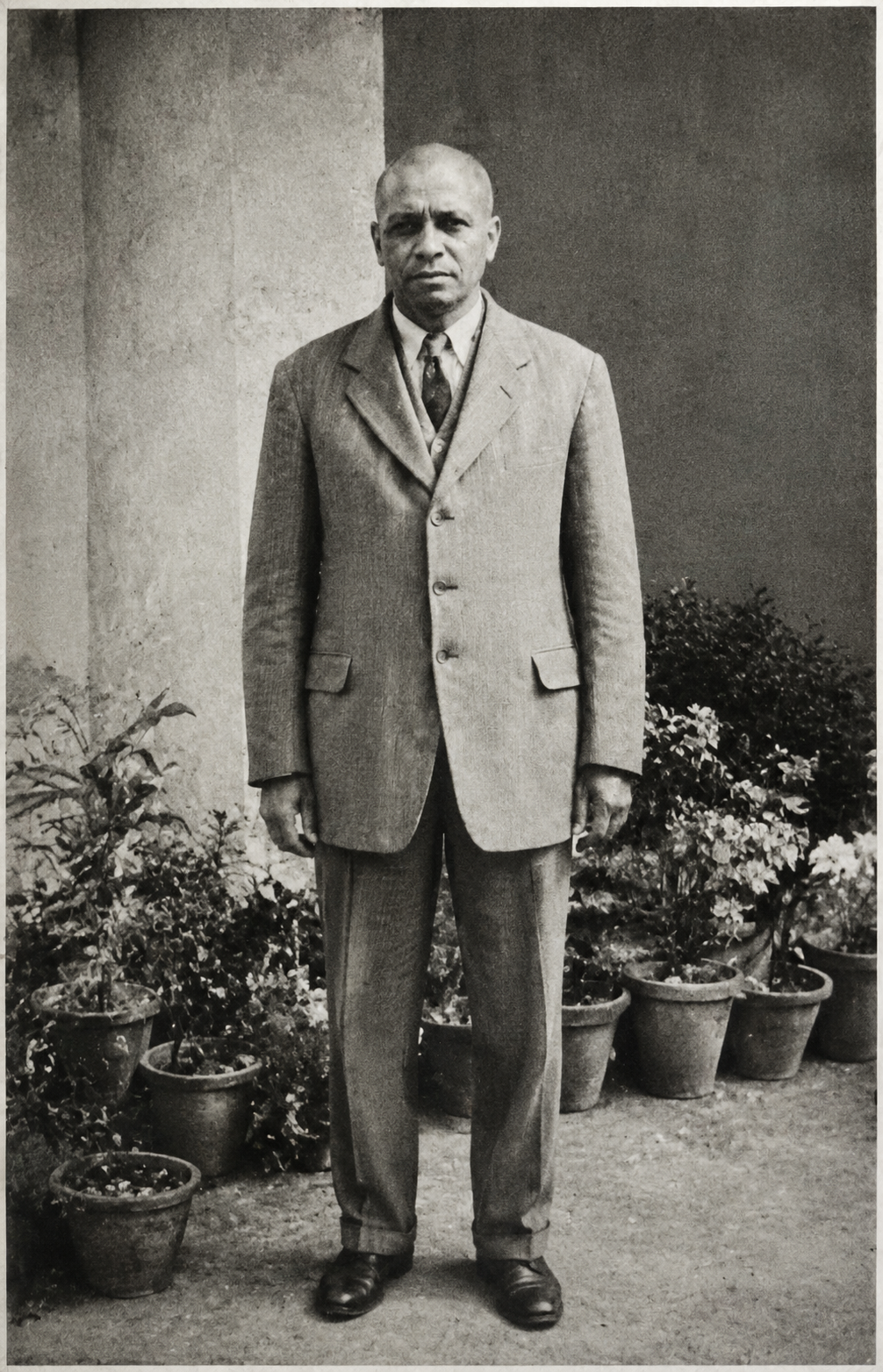
Photos